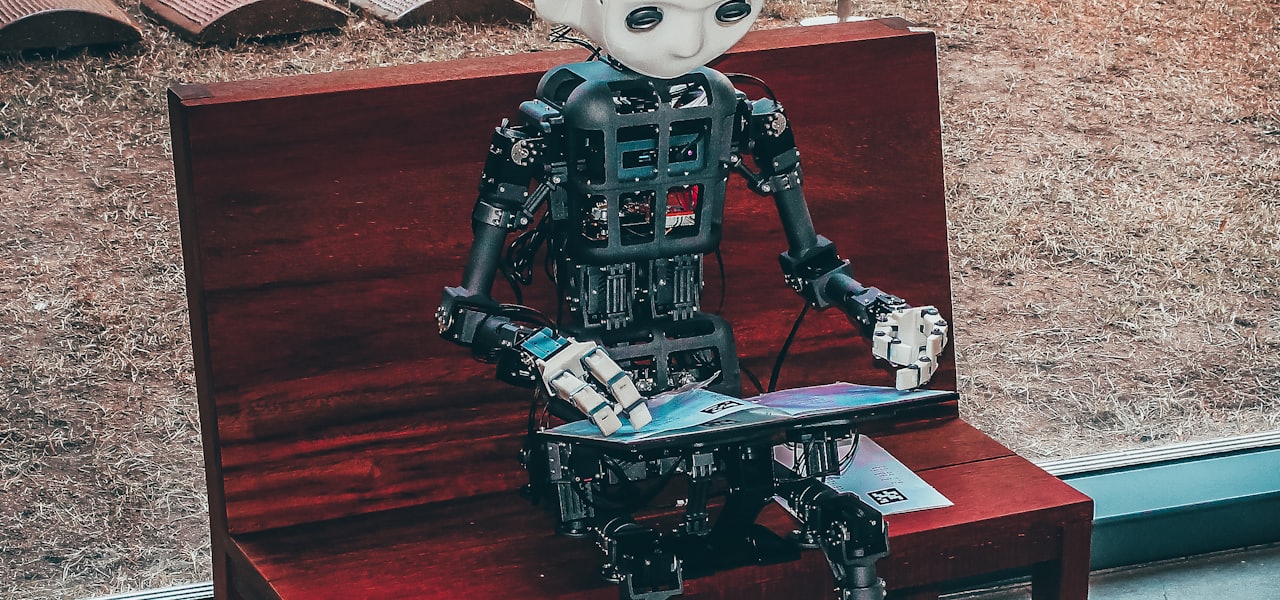
As a subfield in artificial intelligence, diagnosis is concerned with the development of algorithms and techniques that are able to determine whether the behaviour of a system is correct. If the system is not functioning correctly, the algorithm should be able to determine, as accurately as possible, which part of the system is failing, and which kind of fault it is facing. The computation is based on observations, which provide information on the current behaviour. The expression diagnosis also refers to the answer of the question of whether the system is malfunctioning or not, and to the process of computing the answer. This word comes from the medical context where a diagnosis is the process of identifying a disease by its symptoms. == Example == An example of diagnosis is the process of a garage mechanic with an automobile. The mechanic will first try to detect any abnormal behavior based on the observations on the car and his knowledge of this type of vehicle. If he finds out that the behavior is abnormal, the mechanic will try to refine his diagnosis by using new observations and possibly testing the system, until he discovers the faulty component; the mechanic plays an important role in the vehicle diagnosis. == Expert diagnosis == The expert diagnosis (or diagnosis by expert system) is based on experience with the system. Using this experience, a mapping is built that efficiently associates the observations to the corresponding diagnoses. The experience can be provided: By a human operator. In this case, the human knowledge must be translated into a computer language. By examples of the system behaviour. In this case, the examples must be classified as correct or faulty (and, in the latter case, by the type of fault). Machine learning methods are then used to generalize from the examples. The main drawbacks of these methods are: The difficulty acquiring the expertise. The expertise is typically only available after a long period of use of the system (or similar systems). Thus, these methods are unsuitable for safety- or mission-critical systems (such as a nuclear power plant, or a robot operating in space). Moreover, the acquired expert knowledge can never be guaranteed to be complete. In case a previously unseen behaviour occurs, leading to an unexpected observation, it is impossible to give a diagnosis. The complexity of the learning. The off-line process of building an expert system can require a large amount of time and computer memory. The size of the final expert system. As the expert system aims to map any observation to a diagnosis, it will in some cases require a huge amount of storage space. The lack of robustness. If even a small modification is made on the system, the process of constructing the expert system must be repeated. A slightly different approach is to build an expert system from a model of the system rather than directly from an expertise. An example is the computation of a diagnoser for the diagnosis of discrete event systems. This approach can be seen as model-based, but it benefits from some advantages and suffers some drawbacks of the expert system approach. == Model-based diagnosis == Model-based diagnosis is an example of abductive reasoning using a model of the system. In general, it works as follows: We have a model that describes the behaviour of the system (or artefact). The model is an abstraction of the behaviour of the system and can be incomplete. In particular, the faulty behaviour is generally little-known, and the faulty model may thus not be represented. Given observations of the system, the diagnosis system simulates the system using the model, and compares the observations actually made to the observations predicted by the simulation. The modelling can be simplified by the following rules (where A b {\displaystyle Ab\,} is the Abnormal predicate): ¬ A b ( S ) ⇒ I n t 1 ∧ O b s 1 {\displaystyle \neg Ab(S)\Rightarrow Int1\wedge Obs1} A b ( S ) ⇒ I n t 2 ∧ O b s 2 {\displaystyle Ab(S)\Rightarrow Int2\wedge Obs2} (fault model) The semantics of these formulae is the following: if the behaviour of the system is not abnormal (i.e. if it is normal), then the internal (unobservable) behaviour will be I n t 1 {\displaystyle Int1\,} and the observable behaviour O b s 1 {\displaystyle Obs1\,} . Otherwise, the internal behaviour will be I n t 2 {\displaystyle Int2\,} and the observable behaviour O b s 2 {\displaystyle Obs2\,} . Given the observations O b s {\displaystyle Obs\,} , the problem is to determine whether the system behaviour is normal or not ( ¬ A b ( S ) {\displaystyle \neg Ab(S)\,} or A b ( S ) {\displaystyle Ab(S)\,} ). This is an example of abductive reasoning. == Diagnosability == A system is said to be diagnosable if whatever the behavior of the system, we will be able to determine without ambiguity a unique diagnosis. The problem of diagnosability is very important when designing a system because on one hand one may want to reduce the number of sensors to reduce the cost, and on the other hand one may want to increase the number of sensors to increase the probability of detecting a faulty behavior. Several algorithms for dealing with these problems exist. One class of algorithms answers the question whether a system is diagnosable; another class looks for sets of sensors that make the system diagnosable, and optionally comply to criteria such as cost optimization. The diagnosability of a system is generally computed from the model of the system. In applications using model-based diagnosis, such a model is already present and doesn't need to be built from scratch.
Tiimo
Tiimo is an app designed to help neurodivergent individuals with planning their life. In August 2024 the company raised €1.4 million, bringing their total funding to €4.3 million. At that point they had over 500,000 users, including 50,000 paid users. The app has Apple Watch support and a learning platform that includes courses on well-being and neurodiversity. The app was founded by Helene Lassen Nørlem and Melissa Würtz Azari in 2015. After being a finalist in 2024, in December 2025 Tiimo was won Apple’s iPhone App of the Year. The premium version is $10/mo and features an AI chatbot alongside the daily planner.
Relief (feature selection)
Relief is an algorithm developed by Kenji Kira and Larry Rendell in 1992 that takes a filter-method approach to feature selection that is notably sensitive to feature interactions. It was originally designed for application to binary classification problems with discrete or numerical features. Relief calculates a feature score for each feature which can then be applied to rank and select top scoring features for feature selection. Alternatively, these scores may be applied as feature weights to guide downstream modeling. Relief feature scoring is based on the identification of feature value differences between nearest neighbor instance pairs. If a feature value difference is observed in a neighboring instance pair with the same class (a 'hit'), the feature score decreases. Alternatively, if a feature value difference is observed in a neighboring instance pair with different class values (a 'miss'), the feature score increases. The original Relief algorithm has since inspired a family of Relief-based feature selection algorithms (RBAs), including the ReliefF algorithm. Beyond the original Relief algorithm, RBAs have been adapted to (1) perform more reliably in noisy problems, (2) generalize to multi-class problems (3) generalize to numerical outcome (i.e. regression) problems, and (4) to make them robust to incomplete (i.e. missing) data. To date, the development of RBA variants and extensions has focused on four areas; (1) improving performance of the 'core' Relief algorithm, i.e. examining strategies for neighbor selection and instance weighting, (2) improving scalability of the 'core' Relief algorithm to larger feature spaces through iterative approaches, (3) methods for flexibly adapting Relief to different data types, and (4) improving Relief run efficiency. Their strengths are that they are not dependent on heuristics, they run in low-order polynomial time, and they are noise-tolerant and robust to feature interactions, as well as being applicable for binary or continuous data; however, it does not discriminate between redundant features, and low numbers of training instances fool the algorithm. == Relief Algorithm == Take a data set with n instances of p features, belonging to two known classes. Within the data set, each feature should be scaled to the interval [0 1] (binary data should remain as 0 and 1). The algorithm will be repeated m times. Start with a p-long weight vector (W) of zeros. At each iteration, take the feature vector (X) belonging to one random instance, and the feature vectors of the instance closest to X (by Euclidean distance) from each class. The closest same-class instance is called 'near-hit', and the closest different-class instance is called 'near-miss'. Update the weight vector such that W i = W i − ( x i − n e a r H i t i ) 2 + ( x i − n e a r M i s s i ) 2 , {\displaystyle W_{i}=W_{i}-(x_{i}-\mathrm {nearHit} _{i})^{2}+(x_{i}-\mathrm {nearMiss} _{i})^{2},} where i {\displaystyle i} indexes the components and runs from 1 to p. Thus the weight of any given feature decreases if it differs from that feature in nearby instances of the same class more than nearby instances of the other class, and increases in the reverse case. After m iterations, divide each element of the weight vector by m. This becomes the relevance vector. Features are selected if their relevance is greater than a threshold τ. Kira and Rendell's experiments showed a clear contrast between relevant and irrelevant features, allowing τ to be determined by inspection. However, it can also be determined by Chebyshev's inequality for a given confidence level (α) that a τ of 1/sqrt(αm) is good enough to make the probability of a Type I error less than α, although it is stated that τ can be much smaller than that. Relief was also described as generalizable to multinomial classification by decomposition into a number of binary problems. == ReliefF Algorithm == Kononenko et al. propose a number of updates to Relief. Firstly, they find the near-hit and near-miss instances using the Manhattan (L1) norm rather than the Euclidean (L2) norm, although the rationale is not specified. Furthermore, they found taking the absolute differences between xi and near-hiti, and xi and near-missi to be sufficient when updating the weight vector (rather than the square of those differences). === Reliable probability estimation === Rather than repeating the algorithm m times, implement it exhaustively (i.e. n times, once for each instance) for relatively small n (up to one thousand). Furthermore, rather than finding the single nearest hit and single nearest miss, which may cause redundant and noisy attributes to affect the selection of the nearest neighbors, ReliefF searches for k nearest hits and misses and averages their contribution to the weights of each feature. k can be tuned for any individual problem. === Incomplete data === In ReliefF, the contribution of missing values to the feature weight is determined using the conditional probability that two values should be the same or different, approximated with relative frequencies from the data set. This can be calculated if one or both features are missing. === Multi-class problems === Rather than use Kira and Rendell's proposed decomposition of a multinomial classification into a number of binomial problems, ReliefF searches for k near misses from each different class and averages their contributions for updating W, weighted with the prior probability of each class. == Other Relief-based Algorithm Extensions/Derivatives == The following RBAs are arranged chronologically from oldest to most recent. They include methods for improving (1) the core Relief algorithm concept, (2) iterative approaches for scalability, (3) adaptations to different data types, (4) strategies for computational efficiency, or (5) some combination of these goals. For more on RBAs see these book chapters or this most recent review paper. === RRELIEFF === Robnik-Šikonja and Kononenko propose further updates to ReliefF, making it appropriate for regression. === Relieved-F === Introduced deterministic neighbor selection approach and a new approach for incomplete data handling. === Iterative Relief === Implemented method to address bias against non-monotonic features. Introduced the first iterative Relief approach. For the first time, neighbors were uniquely determined by a radius threshold and instances were weighted by their distance from the target instance. === I-RELIEF === Introduced sigmoidal weighting based on distance from target instance. All instance pairs (not just a defined subset of neighbors) contributed to score updates. Proposed an on-line learning variant of Relief. Extended the iterative Relief concept. Introduced local-learning updates between iterations for improved convergence. === TuRF (a.k.a. Tuned ReliefF) === Specifically sought to address noise in large feature spaces through the recursive elimination of features and the iterative application of ReliefF. === Evaporative Cooling ReliefF === Similarly seeking to address noise in large feature spaces. Utilized an iterative `evaporative' removal of lowest quality features using ReliefF scores in association with mutual information. === EReliefF (a.k.a. Extended ReliefF) === Addressing issues related to incomplete and multi-class data. === VLSReliefF (a.k.a. Very Large Scale ReliefF) === Dramatically improves the efficiency of detecting 2-way feature interactions in very large feature spaces by scoring random feature subsets rather than the entire feature space. === ReliefMSS === Introduced calculation of feature weights relative to average feature 'diff' between instance pairs. === SURF === SURF identifies nearest neighbors (both hits and misses) based on a distance threshold from the target instance defined by the average distance between all pairs of instances in the training data. Results suggest improved power to detect 2-way epistatic interactions over ReliefF. === SURF (a.k.a. SURFStar) === SURF extends the SURF algorithm to not only utilized 'near' neighbors in scoring updates, but 'far' instances as well, but employing inverted scoring updates for 'far instance pairs. Results suggest improved power to detect 2-way epistatic interactions over SURF, but an inability to detect simple main effects (i.e. univariate associations). === SWRF === SWRF extends the SURF algorithm adopting sigmoid weighting to take distance from the threshold into account. Also introduced a modular framework for further developing RBAs called MoRF. === MultiSURF (a.k.a. MultiSURFStar) === MultiSURF extends the SURF algorithm adapting the near/far neighborhood boundaries based on the average and standard deviation of distances from the target instance to all others. MultiSURF uses the standard deviation to define a dead-band zone where 'middle-distance' instances do not contribute to scoring. Evidence suggests MultiSURF performs best in detecting pure 2-way feature interactions. === Reli
Growth function
The growth function, also called the shatter coefficient or the shattering number, measures the richness of a set family or class of functions. It is especially used in the context of statistical learning theory, where it is used to study properties of statistical learning methods. The term 'growth function' was coined by Vapnik and Chervonenkis in their 1968 paper, where they also proved many of its properties. It is a basic concept in machine learning. == Definitions == === Set-family definition === Let H {\displaystyle H} be a set family (a set of sets) and C {\displaystyle C} a set. Their intersection is defined as the following set-family: H ∩ C := { h ∩ C ∣ h ∈ H } {\displaystyle H\cap C:=\{h\cap C\mid h\in H\}} The intersection-size (also called the index) of H {\displaystyle H} with respect to C {\displaystyle C} is | H ∩ C | {\displaystyle |H\cap C|} . If a set C m {\displaystyle C_{m}} has m {\displaystyle m} elements then the index is at most 2 m {\displaystyle 2^{m}} . If the index is exactly 2m then the set C {\displaystyle C} is said to be shattered by H {\displaystyle H} , because H ∩ C {\displaystyle H\cap C} contains all the subsets of C {\displaystyle C} , i.e.: | H ∩ C | = 2 | C | , {\displaystyle |H\cap C|=2^{|C|},} The growth function measures the size of H ∩ C {\displaystyle H\cap C} as a function of | C | {\displaystyle |C|} . Formally: Growth ( H , m ) := max C : | C | = m | H ∩ C | {\displaystyle \operatorname {Growth} (H,m):=\max _{C:|C|=m}|H\cap C|} === Hypothesis-class definition === Equivalently, let H {\displaystyle H} be a hypothesis-class (a set of binary functions) and C {\displaystyle C} a set with m {\displaystyle m} elements. The restriction of H {\displaystyle H} to C {\displaystyle C} is the set of binary functions on C {\displaystyle C} that can be derived from H {\displaystyle H} : H C := { ( h ( x 1 ) , … , h ( x m ) ) ∣ h ∈ H , x i ∈ C } {\displaystyle H_{C}:=\{(h(x_{1}),\ldots ,h(x_{m}))\mid h\in H,x_{i}\in C\}} The growth function measures the size of H C {\displaystyle H_{C}} as a function of | C | {\displaystyle |C|} : Growth ( H , m ) := max C : | C | = m | H C | {\displaystyle \operatorname {Growth} (H,m):=\max _{C:|C|=m}|H_{C}|} == Examples == 1. The domain is the real line R {\displaystyle \mathbb {R} } . The set-family H {\displaystyle H} contains all the half-lines (rays) from a given number to positive infinity, i.e., all sets of the form { x > x 0 ∣ x ∈ R } {\displaystyle \{x>x_{0}\mid x\in \mathbb {R} \}} for some x 0 ∈ R {\displaystyle x_{0}\in \mathbb {R} } . For any set C {\displaystyle C} of m {\displaystyle m} real numbers, the intersection H ∩ C {\displaystyle H\cap C} contains m + 1 {\displaystyle m+1} sets: the empty set, the set containing the largest element of C {\displaystyle C} , the set containing the two largest elements of C {\displaystyle C} , and so on. Therefore: Growth ( H , m ) = m + 1 {\displaystyle \operatorname {Growth} (H,m)=m+1} . The same is true whether H {\displaystyle H} contains open half-lines, closed half-lines, or both. 2. The domain is the segment [ 0 , 1 ] {\displaystyle [0,1]} . The set-family H {\displaystyle H} contains all the open sets. For any finite set C {\displaystyle C} of m {\displaystyle m} real numbers, the intersection H ∩ C {\displaystyle H\cap C} contains all possible subsets of C {\displaystyle C} . There are 2 m {\displaystyle 2^{m}} such subsets, so Growth ( H , m ) = 2 m {\displaystyle \operatorname {Growth} (H,m)=2^{m}} . 3. The domain is the Euclidean space R n {\displaystyle \mathbb {R} ^{n}} . The set-family H {\displaystyle H} contains all the half-spaces of the form: x ⋅ ϕ ≥ 1 {\displaystyle x\cdot \phi \geq 1} , where ϕ {\displaystyle \phi } is a fixed vector. Then Growth ( H , m ) = Comp ( n , m ) {\displaystyle \operatorname {Growth} (H,m)=\operatorname {Comp} (n,m)} , where Comp is the number of components in a partitioning of an n-dimensional space by m hyperplanes. 4. The domain is the real line R {\displaystyle \mathbb {R} } . The set-family H {\displaystyle H} contains all the real intervals, i.e., all sets of the form { x ∈ [ x 0 , x 1 ] | x ∈ R } {\displaystyle \{x\in [x_{0},x_{1}]|x\in \mathbb {R} \}} for some x 0 , x 1 ∈ R {\displaystyle x_{0},x_{1}\in \mathbb {R} } . For any set C {\displaystyle C} of m {\displaystyle m} real numbers, the intersection H ∩ C {\displaystyle H\cap C} contains all runs of between 0 and m {\displaystyle m} consecutive elements of C {\displaystyle C} . The number of such runs is ( m + 1 2 ) + 1 {\displaystyle {m+1 \choose 2}+1} , so Growth ( H , m ) = ( m + 1 2 ) + 1 {\displaystyle \operatorname {Growth} (H,m)={m+1 \choose 2}+1} . == Polynomial or exponential == The main property that makes the growth function interesting is that it can be either polynomial or exponential - nothing in-between. The following is a property of the intersection-size: If, for some set C m {\displaystyle C_{m}} of size m {\displaystyle m} , and for some number n ≤ m {\displaystyle n\leq m} , | H ∩ C m | ≥ Comp ( n , m ) {\displaystyle |H\cap C_{m}|\geq \operatorname {Comp} (n,m)} - then, there exists a subset C n ⊆ C m {\displaystyle C_{n}\subseteq C_{m}} of size n {\displaystyle n} such that | H ∩ C n | = 2 n {\displaystyle |H\cap C_{n}|=2^{n}} . This implies the following property of the Growth function. For every family H {\displaystyle H} there are two cases: The exponential case: Growth ( H , m ) = 2 m {\displaystyle \operatorname {Growth} (H,m)=2^{m}} identically. The polynomial case: Growth ( H , m ) {\displaystyle \operatorname {Growth} (H,m)} is majorized by Comp ( n , m ) ≤ m n + 1 {\displaystyle \operatorname {Comp} (n,m)\leq m^{n}+1} , where n {\displaystyle n} is the smallest integer for which Growth ( H , n ) < 2 n {\displaystyle \operatorname {Growth} (H,n)<2^{n}} . == Other properties == === Trivial upper bound === For any finite H {\displaystyle H} : Growth ( H , m ) ≤ | H | {\displaystyle \operatorname {Growth} (H,m)\leq |H|} since for every C {\displaystyle C} , the number of elements in H ∩ C {\displaystyle H\cap C} is at most | H | {\displaystyle |H|} . Therefore, the growth function is mainly interesting when H {\displaystyle H} is infinite. === Exponential upper bound === For any nonempty H {\displaystyle H} : Growth ( H , m ) ≤ 2 m {\displaystyle \operatorname {Growth} (H,m)\leq 2^{m}} I.e, the growth function has an exponential upper-bound. We say that a set-family H {\displaystyle H} shatters a set C {\displaystyle C} if their intersection contains all possible subsets of C {\displaystyle C} , i.e. H ∩ C = 2 C {\displaystyle H\cap C=2^{C}} . If H {\displaystyle H} shatters C {\displaystyle C} of size m {\displaystyle m} , then Growth ( H , C ) = 2 m {\displaystyle \operatorname {Growth} (H,C)=2^{m}} , which is the upper bound. === Cartesian intersection === Define the Cartesian intersection of two set-families as: H 1 ⨂ H 2 := { h 1 ∩ h 2 ∣ h 1 ∈ H 1 , h 2 ∈ H 2 } {\displaystyle H_{1}\bigotimes H_{2}:=\{h_{1}\cap h_{2}\mid h_{1}\in H_{1},h_{2}\in H_{2}\}} . Then: Growth ( H 1 ⨂ H 2 , m ) ≤ Growth ( H 1 , m ) ⋅ Growth ( H 2 , m ) {\displaystyle \operatorname {Growth} (H_{1}\bigotimes H_{2},m)\leq \operatorname {Growth} (H_{1},m)\cdot \operatorname {Growth} (H_{2},m)} === Union === For every two set-families: Growth ( H 1 ∪ H 2 , m ) ≤ Growth ( H 1 , m ) + Growth ( H 2 , m ) {\displaystyle \operatorname {Growth} (H_{1}\cup H_{2},m)\leq \operatorname {Growth} (H_{1},m)+\operatorname {Growth} (H_{2},m)} === VC dimension === The VC dimension of H {\displaystyle H} is defined according to these two cases: In the polynomial case, VCDim ( H ) = n − 1 {\displaystyle \operatorname {VCDim} (H)=n-1} = the largest integer d {\displaystyle d} for which Growth ( H , d ) = 2 d {\displaystyle \operatorname {Growth} (H,d)=2^{d}} . In the exponential case VCDim ( H ) = ∞ {\displaystyle \operatorname {VCDim} (H)=\infty } . So VCDim ( H ) ≥ d {\displaystyle \operatorname {VCDim} (H)\geq d} if-and-only-if Growth ( H , d ) = 2 d {\displaystyle \operatorname {Growth} (H,d)=2^{d}} . The growth function can be regarded as a refinement of the concept of VC dimension. The VC dimension only tells us whether Growth ( H , d ) {\displaystyle \operatorname {Growth} (H,d)} is equal to or smaller than 2 d {\displaystyle 2^{d}} , while the growth function tells us exactly how Growth ( H , m ) {\displaystyle \operatorname {Growth} (H,m)} changes as a function of m {\displaystyle m} . Another connection between the growth function and the VC dimension is given by the Sauer–Shelah lemma: If VCDim ( H ) = d {\displaystyle \operatorname {VCDim} (H)=d} , then: for all m {\displaystyle m} : Growth ( H , m ) ≤ ∑ i = 0 d ( m i ) {\displaystyle \operatorname {Growth} (H,m)\leq \sum _{i=0}^{d}{m \choose i}} In particular, for all m > d + 1 {\displaystyle m>d+1} : Growth ( H , m ) ≤ ( e m / d ) d = O ( m d ) {\displaystyle \operatorname {Growth} (H,m)\leq (
Discrete diffusion model
In machine learning, discrete diffusion models are a class of diffusion models, which themselves are a class of latent variable generative models. Each discrete diffusion model consists of two major components: the forward jump diffusion process, and the reverse jump diffusion process. The goal of diffusion modeling is, given a given dataset and a forward process, to learn a model for the reverse process, such that the reverse process can generate new elements that are distributed similarly as the original dataset. A trained discrete diffusion model can be sampled in many ways, which trades off computational efficiency and sample quality. In general, higher quality data can be obtained, but at the price of higher computational cost. In standard diffusion modeling, the diffusion process takes place over a state space that is continuous space of R n {\displaystyle \mathbb {R} ^{n}} , but over a discrete set S {\displaystyle S} . A discrete set is simply a set where one cannot speak of "infinitesimally close" points. Points can be more or less separated from each other, but the separation is always a finite number. This in particular means the standard framework of continuous diffusion does not apply, since it uses gaussian noise, which is continuous. Nevertheless, an analogous theory can be produced. Discrete diffusion is usually used for language modeling. In practice, the state space S {\displaystyle S} is not only discrete, but finite, so this is what we will assume from now on. == Continuous time Markov process == In the case of continuous state space, during the forward discrete diffusion process, at each step t → t + d t {\displaystyle t\to t+dt} , we mix in an infinitesimal amount of gaussian noise d x t = − 1 2 β ( t ) x t d t + β ( t ) d W t {\displaystyle dx_{t}=-{\frac {1}{2}}\beta (t)x_{t}dt+{\sqrt {\beta (t)}}dW_{t}} . This changes the probability density function, by first a convolution with the density of a gaussian, followed by a scaling. In the case of discrete state space, the gaussian noise must be replaced by a noise that takes values over a finite set. For example, if the noise is the uniform distribution over S {\displaystyle S} , then the probability distribution at time t + d t {\displaystyle t+dt} satisfies q t + d t ( x ) = ( 1 − d t ) q t ( x ) + d t ( 1 | S | ∑ y ∈ S q t ( y ) ) {\displaystyle q_{t+dt}(x)=(1-dt)q_{t}(x)+dt\left({\frac {1}{|S|}}\sum _{y\in S}q_{t}(y)\right)} More succinctly, ∂ t q t ( x ) = − ( 1 − 1 | S | ) q t ( x ) + ∑ y ∈ S , y ≠ x 1 | S | q t ( y ) {\displaystyle \partial _{t}q_{t}(x)=-\left(1-{\frac {1}{|S|}}\right)q_{t}(x)+\sum _{y\in S,y\neq x}{\frac {1}{|S|}}q_{t}(y)} In general, we do not need to convolve with a uniformly distributed noise, but with an arbitrary noise process. That is, we use an arbitrary matrix Q t {\displaystyle Q_{t}} such that ∂ t q t ( y ) = ∑ x ∈ S Q t ( y , x ) q t ( x ) {\displaystyle \partial _{t}q_{t}(y)=\sum _{x\in S}Q_{t}(y,x)q_{t}(x)} where Q t {\displaystyle Q_{t}} is called the rate matrix. Any matrix may be used as a rate matrix if it has non-negative off-diagonals, and each column sums to 0: Q t ( y , x ) ≥ 0 ∀ y ≠ x , ∑ y ∈ S Q t ( y , x ) = 0 ∀ x {\displaystyle Q_{t}(y,x)\geq 0\quad \forall y\neq x,\quad \sum _{y\in S}Q_{t}(y,x)=0\quad \forall x} A continuous time Markov chain (CTMC) is defined by a continuous function Q {\displaystyle Q} that maps any time t ∈ [ 0 , T ) {\displaystyle t\in [0,T)} to a rate matrix Q t {\displaystyle Q_{t}} . Given the function Q {\displaystyle Q} , time-evolution under the CTMC is done as follows: Given state x t {\displaystyle x_{t}} at time t {\displaystyle t} , and given an infinitesimal d t {\displaystyle dt} , the state at t + d t {\displaystyle t+dt} is x t + d t {\displaystyle x_{t+dt}} , such that Pr ( x t + d t | x t ) = { 1 + Q t ( x t + d t , x t ) d t if x t + d t = x t Q t ( x t + d t , x t ) d t else {\displaystyle \Pr(x_{t+dt}|x_{t})={\begin{cases}1+Q_{t}(x_{t+dt},x_{t})dt&{\text{if }}x_{t+dt}=x_{t}\\Q_{t}(x_{t+dt},x_{t})dt&{\text{else}}\end{cases}}} This implies that the probability distribution function evolves according to ∂ t q t ( y ) = ∑ x ∈ S Q t ( y , x ) q t ( x ) {\displaystyle \partial _{t}q_{t}(y)=\sum _{x\in S}Q_{t}(y,x)q_{t}(x)} which is what we previously specified. === Backward process === Similarly to the case of continuous diffusion, in discrete diffusion, there exists a backward diffusion process Q ¯ t {\displaystyle {\bar {Q}}_{t}} : s ( x , t ) y := q t ( y ) q t ( x ) , Q ¯ t ( y , x ) := { s ( x , t ) y Q t ( x , y ) if y ≠ x − ∑ y : y ≠ x Q ¯ t ( y , x ) if y = x {\displaystyle s(x,t)_{y}:={\frac {q_{t}(y)}{q_{t}(x)}},\quad {\bar {Q}}_{t}(y,x):={\begin{cases}s(x,t)_{y}Q_{t}(x,y)&{\text{if }}y\neq x\\-\sum _{y:y\neq x}{\bar {Q}}_{t}(y,x)&{\text{if }}y=x\end{cases}}} where s ( x , t ) y {\displaystyle s(x,t)_{y}} should be interpreted as the discrete score or concrete score, since, abusing notation a bit, the score function is ∇ ln ρ t ( x ) = 1 d x ( ρ t ( x + d x ) ρ t ( x ) − 1 ) {\displaystyle \nabla \ln \rho _{t}(x)={\frac {1}{dx}}\left({\frac {\rho _{t}(x+dx)}{\rho _{t}(x)}}-1\right)} . If we picture the distribution q t {\displaystyle q_{t}} as a bunch of point-masses, one per state x ∈ S {\displaystyle x\in S} , then the forward diffusion from time t {\displaystyle t} to t + d t {\displaystyle t+dt} is performed by removing Q t ( x , y ) q t ( y ) d t {\displaystyle Q_{t}(x,y)q_{t}(y)dt} from the mass at y {\displaystyle y} and moving it to the mass at x {\displaystyle x} , for each pair x ≠ y {\displaystyle x\neq y} . Thus, the process is reversed in detail by the CTMC defined by Q ¯ {\displaystyle {\bar {Q}}} , since Q ¯ t ( y , x ) q t ( x ) = Q t ( x , y ) q t ( y ) {\displaystyle {\bar {Q}}_{t}(y,x)q_{t}(x)=Q_{t}(x,y)q_{t}(y)} . Given Q ¯ t {\displaystyle {\bar {Q}}_{t}} , if we have a way to sample from q t {\displaystyle q_{t}} , then we can sample from q t − d t {\displaystyle q_{t-dt}} by first sampling x t ∼ q t {\displaystyle x_{t}\sim q_{t}} , then sampling x t − d t {\displaystyle x_{t-dt}} according to Pr ( x t − d t | x t ) = { 1 + Q ¯ t ( x t − d t , x t ) d t if x t − d t = x t Q ¯ t ( x t − d t , x t ) d t else {\displaystyle \Pr(x_{t-dt}|x_{t})={\begin{cases}1+{\bar {Q}}_{t}(x_{t-dt},x_{t})dt&{\text{if }}x_{t-dt}=x_{t}\\{\bar {Q}}_{t}(x_{t-dt},x_{t})dt&{\text{else}}\end{cases}}} === Overall plan of score-matching discrete diffusion modeling === Similar to score-matching continuous diffusion, score-matching discrete diffusion is a method to sample an initial distribution. If we have a certain function s θ {\displaystyle s_{\theta }} that approximates the true score function s θ ( x , t ) y ≈ s ( x , t ) y {\displaystyle s_{\theta }(x,t)_{y}\approx s(x,t)_{y}} , then it allows a corresponding Q ¯ θ {\displaystyle {\bar {Q}}^{\theta }} to be defined in the same way. If we also have a base distribution q base {\displaystyle q_{\text{base}}} such that it is easy to sample from, and approximately equal to the true terminal distribution q base ≈ q T {\displaystyle q_{\text{base}}\approx q_{T}} , then we can perform the backward CTMC with Q ¯ θ {\displaystyle {\bar {Q}}^{\theta }} and q T θ := q terminal {\displaystyle q_{T}^{\theta }:=q_{\text{terminal}}} . When both approximations are good, the backward CTMC would give q 0 θ ≈ q 0 {\displaystyle q_{0}^{\theta }\approx q_{0}} . This is the idea of score-matching discrete diffusion modeling. If q data {\displaystyle q_{\text{data}}} is sharp, in the sense that for some x , x ′ {\displaystyle x,x'} , we have q data ( x ) ≫ q data ( x ′ ) {\displaystyle q_{\text{data}}(x)\gg q_{\text{data}}(x')} , then the score function would diverge as 1 / t {\displaystyle 1/t} at the t → 0 {\displaystyle t\to 0} limit. To avoid this in practice, it is common to use early stopping, which is to stop the backward process at some time δ > 0 {\displaystyle \delta >0} , and sample from q δ θ {\displaystyle q_{\delta }^{\theta }} instead of q 0 θ {\displaystyle q_{0}^{\theta }} . === Tractable forward processes === The theory of CTMC works for any continuous choice of rate matrices Q {\displaystyle Q} . However, most choices are computationally expensive and cannot be used in practice. In the case of continuous diffusion, the gaussian noise is used for the simple reason that the sum of any number of gaussians is still a gaussian. This allows one to sample any x t ∼ ρ t {\displaystyle x_{t}\sim \rho _{t}} by sampling a single x 0 ∼ ρ 0 {\displaystyle x_{0}\sim \rho _{0}} , followed by a single gaussian noise z ∼ N ( 0 , I ) {\displaystyle z\sim {\mathcal {N}}(0,I)} , and let x t = α ¯ t x 0 + σ t z {\displaystyle x_{t}={\sqrt {{\bar {\alpha }}_{t}}}x_{0}+\sigma _{t}z} , without needing any x s {\displaystyle x_{s}} for any 0 < s < t {\displaystyle 0 Cognitive computing refers to technology platforms that, broadly speaking, are based on the scientific disciplines of artificial intelligence and signal processing. These platforms encompass machine learning, reasoning, natural language processing, speech recognition and vision (object recognition), human–computer interaction, dialog and narrative generation, among other technologies. == Definition == At present, there is no widely agreed upon definition for cognitive computing in either academia or industry. In general, the term cognitive computing has been used to refer to new hardware and/or software that mimics the functioning of the human brain (2004). In this sense, cognitive computing is a new type of computing with the goal of more accurate models of how the human brain/mind senses, reasons, and responds to stimulus. Cognitive computing applications link data analysis and adaptive page displays (AUI) to adjust content for a particular type of audience. As such, cognitive computing hardware and applications strive to be more affective and more influential by design. The term "cognitive system" also applies to any artificial construct able to perform a cognitive process where a cognitive process is the transformation of data, information, knowledge, or wisdom to a new level in the DIKW Pyramid. While many cognitive systems employ techniques having their origination in artificial intelligence research, cognitive systems, themselves, may not be artificially intelligent. For example, a neural network trained to recognize cancer on an MRI scan may achieve a higher success rate than a human doctor. This system is certainly a cognitive system but is not artificially intelligent. Cognitive systems may be engineered to feed on dynamic data in real-time, or near real-time, and may draw on multiple sources of information, including both structured and unstructured digital information, as well as sensory inputs (visual, gestural, auditory, or sensor-provided). == Cognitive analytics == Cognitive computing-branded technology platforms typically specialize in the processing and analysis of large, unstructured datasets. == Applications == Education Even if cognitive computing can not take the place of teachers, it can still be a heavy driving force in the education of students. Cognitive computing being used in the classroom is applied by essentially having an assistant that is personalized for each individual student. This cognitive assistant can relieve the stress that teachers face while teaching students, while also enhancing the student's learning experience over all. Teachers may not be able to pay each and every student individual attention, this being the place that cognitive computers fill the gap. Some students may need a little more help with a particular subject. For many students, Human interaction between student and teacher can cause anxiety and can be uncomfortable. With the help of Cognitive Computer tutors, students will not have to face their uneasiness and can gain the confidence to learn and do well in the classroom. While a student is in class with their personalized assistant, this assistant can develop various techniques, like creating lesson plans, to tailor and aid the student and their needs. Healthcare Numerous tech companies are in the process of developing technology that involves cognitive computing that can be used in the medical field. The ability to classify and identify is one of the main goals of these cognitive devices. This trait can be very helpful in the study of identifying carcinogens. This cognitive system that can detect would be able to assist the examiner in interpreting countless numbers of documents in a lesser amount of time than if they did not use Cognitive Computer technology. This technology can also evaluate information about the patient, looking through every medical record in depth, searching for indications that can be the source of their problems. Commerce Together with Artificial Intelligence, it has been used in warehouse management systems to collect, store, organize and analyze all related supplier data. All these aims at improving efficiency, enabling faster decision-making, monitoring inventory and fraud detection Human Cognitive Augmentation In situations where humans are using or working collaboratively with cognitive systems, called a human/cog ensemble, results achieved by the ensemble are superior to results obtainable by the human working alone. Therefore, the human is cognitively augmented. In cases where the human/cog ensemble achieves results at, or superior to, the level of a human expert then the ensemble has achieved synthetic expertise. In a human/cog ensemble, the "cog" is a cognitive system employing virtually any kind of cognitive computing technology. Other use cases Speech recognition Sentiment analysis Face detection Risk assessment Fraud detection Behavioral recommendations == Industry work == Cognitive computing in conjunction with big data and algorithms that comprehend customer needs, can be a major advantage in economic decision making. The powers of cognitive computing and artificial intelligence hold the potential to affect almost every task that humans are capable of performing. This can negatively affect employment for humans, as there would be no such need for human labor anymore. It would also increase the inequality of wealth; the people at the head of the cognitive computing industry would grow significantly richer, while workers without ongoing, reliable employment would become less well off. The more industries start to use cognitive computing, the more difficult it will be for humans to compete. Increased use of the technology will also increase the amount of work that AI-driven robots and machines can perform. The influence of competitive individuals in conjunction with artificial intelligence/cognitive computing has the potential to change the course of humankind. Margin-infused relaxed algorithm (MIRA) is a machine learning and online algorithm for multiclass classification problems. It is designed to learn a set of parameters (vector or matrix) by processing all the given training examples one-by-one and updating the parameters according to each training example, so that the current training example is classified correctly with a margin against incorrect classifications at least as large as their loss. The change of the parameters is kept as small as possible. A two-class version called binary MIRA simplifies the algorithm by not requiring the solution of a quadratic programming problem (see below). When used in a one-vs-all configuration, binary MIRA can be extended to a multiclass learner that approximates full MIRA, but may be faster to train. The flow of the algorithm looks as follows: The update step is then formalized as a quadratic programming problem: Find m i n ‖ w ( i + 1 ) − w ( i ) ‖ {\displaystyle min\|w^{(i+1)}-w^{(i)}\|} , so that s c o r e ( x t , y t ) − s c o r e ( x t , y ′ ) ≥ L ( y t , y ′ ) ∀ y ′ {\displaystyle score(x_{t},y_{t})-score(x_{t},y')\geq L(y_{t},y')\ \forall y'} , i.e. the score of the current correct training y {\displaystyle y} must be greater than the score of any other possible y ′ {\displaystyle y'} by at least the loss (number of errors) of that y ′ {\displaystyle y'} in comparison to y {\displaystyle y} .Cognitive computing
Margin-infused relaxed algorithm