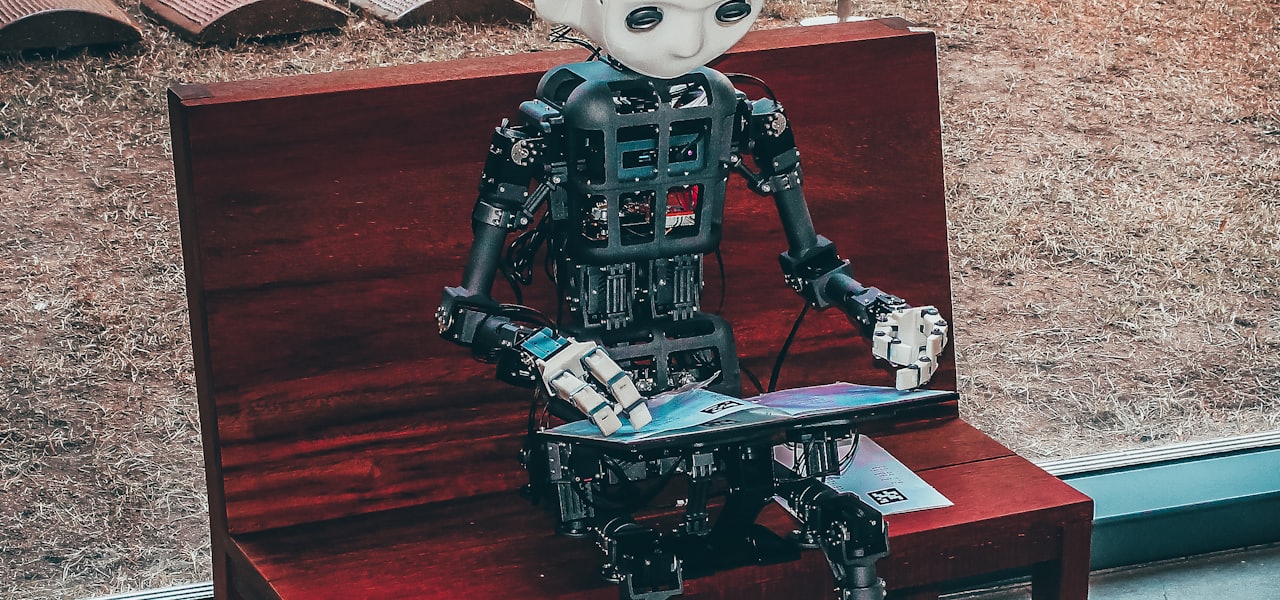
A social employee is a worker operating within a social business model. Following an organization's social computing guidelines, social employees use social media tools both for internal workflow and collaboration purposes and for external engagement with customers, prospects and stakeholders through a combination of social media marketing, content marketing, social marketing, and social selling. Social employee programs are considered to be as much about culture and engagement as they are about business processes and best practices. In addition to increased leads and sales, social employee best practices are said to improve business outcomes important to social media marketing, such as increased connections and web traffic, improved brand identification and "chatter", and better customer advocacy. == Overview == The term "social employee" was first introduced to describe those exhibiting the emerging characteristics of workers operating under a social business model. The term is often used interchangeably with similar designations like "employee advocate" or "social employee advocate". Crucial to the perceived value of the social employee is the concept of the digital footprint. While organizations are able to generate large bases of followers through social media, research shows that brand marketing and engagement efforts through these networks are not as effective as those of individual employees. In fact, some research indicates that employee experts are more trusted than any other member of an organization. Because of this, social employee programs are designed to train, empower, and support employee engagement efforts in the hopes of authentically engaging larger communities, increasing the frequency of shares, reviews, and other forms of "earned media" and expanding the brand's presence on the web. == The personal or employee brand == A foundational concept of the social employee is the idea of the personal or employee brand. This concept first gained popular attention in a 1997 FastCompany article by business leader Tom Peters titled "The Brand Called You". In the article, Peters argued that the premium placed on branding impacted workers' lives to such an extent that creating and cultivating a distinct personal brand had become a professional necessity. According to Peters, doing so built trust, loyalty, visibility, influence, and employability. With increased adoption of social media tools by both businesses and consumers in the early 21st century, many business leaders became increasingly concerned with social engagement, both internally among employees and externally with customers and other stakeholders. While many in the business community acknowledged the potential social tools had for improved collaboration, productivity, and brand messaging, the concern that employees would misrepresent their brand, disclose proprietary information, or otherwise damage their company's reputation or ability to conduct business persisted. As a result, many began to advocate for employee branding as a solution to this problem. This helped give new meaning to the concept of brand ambassadorship, positioning everyday employees in public, and potentially high-profile, engagement roles. == Characteristics == === Engaged === Because social employee advocacy is dependent on the perceived authenticity of the employee, engagement is highly valued in social organizations. Further, data show the measurable impact of employee engagement on organizational productivity and profitability: Happy employees were found to be 12 percent more productive. In one study, engaged employees were found to be 38 percent more likely to produce at above-average rates. In another, organizations with engaged employees had a 19 percent higher than average shareholder return, while organizations with disengaged employees experienced shareholder return that was 44 percent below average. Engaged companies were found to outperform disengaged companies by up to 202 percent. Companies with strong focus on culture were found to have an average 13.9 percent turnover rate, while those with a low focus experience were found to have a 48.4 percent turnover rate. === Flexible job environment and work–life balance === The number of professionals working mobile or remote has risen considerably since 2010. While estimates vary, one study found that number of organizations with mobile or remote employees is expected to rise from 24 percent in 2012 to 89 percent by 2020. Other research has estimated that by 2020, 105.4 million professionals will work remotely in America, about 72.3 percent of the total workforce. This change has been linked to a rise in social technologies, including biometrics, wearables, near-field communications, and augmented reality. Social employees have also put a greater emphasis on work–life balance, with many believing that advances in technology can directly support efforts in this area. Purported benefits of this shift include a more flexible workforce, reduced business costs, and greater organizational leverage in attracting and retaining top talent. === Buys into the brand's story === In 2009, thought leader Simon Sinek presented a speech called "How Great Leaders Inspire Action" at a TEDxPugetSound event. Sinek's central argument in this speech was, "People don't buy what you do. They buy why you do it." This concept—that the story behind a business or product offering is a more compelling sales tool than the product itself—is frequently cited in social media marketing as a way to build authentic connections with stakeholders. However, others have argued that for employees to share a brand's story authentically, they must be engaged in that story themselves, and as a result, many companies have made storytelling part of their culture programs. === Collaborative === An implicit tenet in social business is that social technologies aren't a barrier to productivity, but rather a path to increased connectivity. The shift in enterprise software systems like IBM Connections to incorporate social communication models, such as mentions, wikis, and newsfeeds, reflects the changing communication dynamics within business. With an increase in diversity and sophistication in collaborative software platforms, social organizations have sought to find new creative ways to utilize these tools and secure employee buy-in around them. Crowdsourcing has also become popular in social businesses. Examples include AT&T's program The Innovation Pipeline (TIP), begun in 2009, which has generated over 28,000 ideas that have led to over 75 projects with funding exceeding $44 million. IBM has also put considerable resources into such processes, producing its social computing guidelines through employee crowdsourcing, as well as its Connections platform through the Technology Adoption Program (TAP), a more formalized crowdsourcing initiative. Another popular form of internal collaboration is the hack day, or hackathon. Organizations such as Netflix, Facebook, and IBM use hack days to pull employees out of their day-to-day work environments and encourage them to collaborate in nontraditional ways in an attempt to drive disruptive innovation. Social employees are often encouraged to seek external collaboration opportunities with customers and prospects. For example, Procter & Gamble introduced the Live Well Collaborative to connect with external stakeholders and develop products and services for the 50+ demographic. === Social listener === A social listener is someone who engages in social listening, or social media monitoring, for professional means. Social employees can use social media monitoring for a variety of reasons, including professional development, industry news and trends, and gauging market sentiment. Some have argued that social listening is one of the most important components of social business, as it enables organizations to collect rich market data, make more informed strategic decisions, and respond to customer needs more authentically. === Customer-centric === Advocates of customer-centricity in social business argue that social media has changed the dynamic from one-way brand messaging to shared interactions between brand and customer. Brand and customer engagement is seen as a means of creating more lasting connections with customers and prospects and empowering them to become brand promoters. Customer-centric interactions are seen to have distinct value to brands, as research shows that prospects are far more likely to trust brand-related messaging from a friend or family member than they are from a brand. As a means of building social employees, some social advocates have also called for a broader definition of customer to include the employees themselves. In the book The Pursuit of Social Business Excellence, authors Vala Afshar and Brad Martin made the following argument: A social business operates with the guiding principle that each employee's responsi
List of security hacking incidents
This list of security hacking incidents covers important or noteworthy events in the history of security hacking and cracking. == 1900 == === 1903 === Magician and inventor Nevil Maskelyne disrupts John Ambrose Fleming's public demonstration of Guglielmo Marconi's purportedly secure wireless telegraphy technology, sending insulting Morse code messages through the auditorium's projector. == 1930s == === 1932 === Polish cryptologists Marian Rejewski, Henryk Zygalski and Jerzy Różycki broke the Enigma machine code. === 1939 === Alan Turing, Gordon Welchman and Harold Keen worked together to develop the codebreaking device Bombe (based off of Rejewski's work on Bomba). The Enigma machine's use of a reliably small key space makes it vulnerable to brute force attacks. == 1940s == === 1943 === René Carmille, comptroller general of the Vichy French Army, hacked the punch card system used by the Nazis to locate Jews. === 1949 === The theory that underlies computer viruses was first made public in 1949, when computer pioneer John von Neumann presented a paper titled "Theory and Organization of Complicated Automata". In the paper, von Neumann speculated that computer programs could reproduce themselves. == 1950s == === 1955 === At MIT, "hack" first came to mean playing with machines. An April 1955 meeting of the Tech Model Railroad Club has one say that "Mr. Eccles requests that anyone working or hacking on the electrical system turn the power off to avoid fuse blowing." === 1957 === Joe "Joybubbles" Engressia, a blind seven-year-old boy with perfect pitch, discovered that whistling the fourth E above middle C (a frequency of 2600 Hz) would interfere with AT&T's automated telephone systems, thereby inadvertently opening the door for phreaking. == 1960s == Various phreaking boxes are used to interact with automated telephone systems. === 1963 === The first ever reference to malicious hacking is 'phreaking' in MIT's student newspaper, The Tech, containing hackers tying up the lines with Harvard, configuring the PDP-1 to make free calls, war dialing and accumulating large phone bills. === 1965 === William D. Mathews from MIT finds a vulnerability in a CTSS running on an IBM 7094. The standard text editor on the system was designed to be used by one user at a time, working in one directory, and so it created a temporary file with a constant name for all instances of the editor. The flaw was discovered when two system programmers were editing at the same time and the temporary files for the message of the day and the password file became swapped, causing the contents of the system CTSS password file to display to any user logging into the system. === 1967 === The first known incidence of network penetration hacking took place when members of a computer club at a suburban Chicago high school were provided access to IBM's APL network. In the fall of 1967, IBM (through Science Research Associates) approached Evanston Township High School with the offer of four 2741 Selectric teletypewriter-based terminals with dial-up modem connectivity to an experimental computer system which implemented an early version of the APL programming language. The APL network system was structured into workspaces which were assigned to various clients using the system. Working independently, the students quickly learned the language and the system. They were free to explore the system, often using existing code available in public workspaces as models for their own creations. Eventually, curiosity drove the students to explore the system's wider context. This first informal network penetration effort was later acknowledged as helping harden the security of one of the first publicly accessible networks:Science Research Associates undertook to write a full APL system for the IBM 1500. They modeled their system after APL/360, which had by that time been developed and seen substantial use inside of IBM, using code borrowed from MAT/1500 where possible. In their documentation, they acknowledge their gratitude to "a number of high school students for their compulsion to bomb the system". This was an early example of a kind of sportive, but very effective, debugging that was often repeated in the evolution of APL systems. == 1970s == === 1971 === John T. Draper (later nicknamed Captain Crunch), his friend Joe Engressia (also known as Joybubbles), and blue box phone phreaking hit the news with an Esquire magazine feature story. === 1979 === Kevin Mitnick breaks into his first major computer system, the Ark, which was the computer system Digital Equipment Corporation (DEC) used for developing their RSTS/E operating system software. == 1980s == === 1980 === The FBI investigates a breach of security at National CSS (NCSS). The New York Times, reporting on the incident in 1981, describes hackers as: Technical experts, skilled, often young, computer programmers who almost whimsically probe the defenses of a computer system, searching out the limits and the possibilities of the machine. Despite their seemingly subversive role, hackers are a recognized asset in the computer industry, often highly prized. The newspaper describes white hat activities as part of a "mischievous but perversely positive 'hacker' tradition". When a National CSS employee revealed the existence of his password cracker, which he had used on customer accounts, the company chastised him not for writing the software but for not disclosing it sooner. The letter of reprimand stated that "The Company realizes the benefit to NCSS and in fact encourages the efforts of employees to identify security weaknesses to the VP, the directory, and other sensitive software in files". === 1981 === Chaos Computer Club forms in Germany. Ian Murphy, aka Captain Zap, was the first cracker to be tried and convicted as a felon. Murphy broke into AT&T's computers in 1981 and changed the internal clocks that metered billing rates. People were getting late-night discount rates when they called at midday. Of course, the bargain-seekers who waited until midnight to call long distance were hit with high bills. === 1983 === The 414s break into 60 computer systems at institutions ranging from the Los Alamos National Laboratory to Manhattan's Memorial Sloan-Kettering Cancer Center. The incident appeared as the cover story of Newsweek with the title "Beware: Hackers at play". As a result, the U.S. House of Representatives held hearings on computer security and passed several laws. The group KILOBAUD is formed in February, kicking off a series of other hacker groups that formed soon after. The movie WarGames introduces the wider public to the phenomenon of hacking and creates a degree of mass paranoia about hackers and their supposed abilities to bring the world to a screeching halt by launching nuclear ICBMs. The U.S. House of Representatives begins hearings on computer security hacking. In his Turing Award lecture, Ken Thompson mentions "hacking" and describes a security exploit that he calls a "Trojan horse". === 1984 === Someone calling himself Lex Luthor founds the Legion of Doom. Named after a Saturday morning cartoon, the LOD had the reputation of attracting "the best of the best"—until one of the most talented members called Phiber Optik feuded with Legion of Doomer Erik Bloodaxe and got 'tossed out of the clubhouse'. Phiber's friends formed a rival group, the Masters of Deception. The Comprehensive Crime Control Act gives the Secret Service jurisdiction over computer fraud. The Cult of the Dead Cow forms in Lubbock, Texas, and begins publishing its underground ezine. The hacker magazine 2600 begins regular publication, right when TAP was putting out its final issue. The editor of 2600, "Emmanuel Goldstein" (whose real name is Eric Corley), takes his handle from the leader of the resistance in George Orwell's Nineteen Eighty-Four. The publication provides tips for would-be hackers and phone phreaks, as well as commentary on the hacker issues of the day. Today, copies of 2600 are sold at most large retail bookstores. The Chaos Communication Congress, the annual European hacker conference organized by the Chaos Computer Club, is held in Hamburg, Germany. William Gibson's groundbreaking science fiction novel Neuromancer, about "Case", a futuristic computer hacker, is published. Considered the first major cyberpunk novel, it brought into hacker jargon such terms as "cyberspace", "the matrix", "simstim", and "ICE". === 1985 === KILOBAUD is re-organized into P.H.I.R.M. and begins sysopping hundreds of bulletin board systems (BBSs) throughout the United States, Canada, and Europe. The online 'zine Phrack is established. The Hacker's Handbook is published in the UK. The FBI, Secret Service, Middlesex County NJ Prosecutor's Office and various local law enforcement agencies execute seven search warrants concurrently across New Jersey on July 12, 1985, seizing equipment from BBS operators and users alike for "complicity in computer theft", under a n
Social media age verification laws in the United States
In the United States, age verification laws for social media are ostensibly designed to limit young people's access to content deemed problematic such as pornography and to reduce the negative impact of social media on the mental health and well-being of children and adolescents. The purpose and effects of such laws are highly contested. Critics say that these laws suppress free speech by removing online anonymity. They have also stated the laws undermine safety, even for children, by increasing the exposure of user data to breaches, many sites require government IDs and biometric data (such as photographs), often transmitted or secured insecurely and without encryption. They also note that the measures are easily circumvented with VPNs, prompting some states such as Michigan and Wisconsin to propose legislation banning VPNs. == Laws == Many state legislatures have considered or enacted legislation pertaining to young people and social media. In 2022, California passed the California Age-Appropriate Design Code Act (AB 2273) requiring websites that are likely to be used by minors to estimate visitors' ages. On March 23, 2023, Utah Governor Spencer Cox signed SB 152 and HB 311, collectively known as the Utah Social Media Regulation Act, which requires age verification; if a user is under 18, they have to get parental consent before making an account on any social media platform. Few laws have gone into effect partially due to court challenges. === Arkansas === On April 11, 2023, Arkansas enacted SB 396, the Social Media Safety Act. The law requires certain social media companies that make over $100 million per year to verify the age of new users using a third party, and to obtain parental consent for users under 18. It excludes social media companies that allow a user to generate short video clips as well as games. The law was set to go in effect in September 2023. On June 29, 2023, NetChoice sued the Attorney General of Arkansas Tim Griffin in The Western District Court of Arkansas to block enforcement of the law, supported by the American Civil Liberties Union and the Electronic Frontier Foundation (EFF). On July 7, 2023, NetChoice filed a motion for a preliminary injunction to block enforcement of the law. On July 27, Griffin and Tony Allen filed briefs in opposition to the preliminary injunction. The preliminary injunction was granted by Judge Timothy L. Brooks on August 31, reasoning that the law was too vague, that NetChoice's members will suffer irreparable harm if the act goes into effect, and that age restrictions were ineffective. === California === ==== Digital Age Assurance Act (AB 1043) ==== On October 13, 2025, Gavin Newsom signed the Digital Age Assurance Act into law, which requires operating system providers to estimate the age of a user and into 4 age categories: Under 13 13 - 15 16 - 17 18 and over It comes into force on January 1, 2027. ==== California Age-Appropriate Design Code (AB 2273) ==== On September 15, 2022, California enacted AB 2273, the California Age-Appropriate Design Code Act. Its most controversial provisions required online services that are likely to be used by those under 18 to estimate the age of child users with a "reasonable level of certainty". It also required these services to file Data Protection Impact Assessments (DPIAs) certifying whether an online product, service, or feature could harm children, including by exposing them to (potentially) harmful content. The law does not define harmful content. Before the law took effect, EFF sent a veto request to Newsom. On December 14, 2022, NetChoice sued. On September 18, 2023, Federal Judge Beth Labson Freeman granted a preliminary injunction. The 9th Circuit on August 16, 2024, affirmed the injunction against the DPIA section of the law and sent the rest back, because the argument in the 9th circuit was mainly focused on the DPIA. ==== Protecting Our Kids from Social Media Addiction Act (SB 976) ==== On September 20, 2024, California enacted SB 976, Protecting Our Kids from Social Media Addiction. The law requires online platforms to exclude those under 18 from "addictive" feeds unless parental consent is given. It requires online platforms to not send notifications to someone under 18 between 12:00 AM and 6:00 AM without parental consent or between 8:00 am – 3:00 pm without parental consent from September through May (the law does not define what a "notification" is). The law took effect on January 1, 2025, with age verification required as of December 31, 2026. On November 12, NetChoice sued in the Northern District and before Judge Edward John Davila. On December 31, the judge blocked the sections of SB 976 that required time-of-day restrictions. He also enjoined requirements to report on the number of minor users as well as the number of parental assents to access an addictive feed. He did not block the age assurance requirement or blocking minors from seeing addictive feeds without parental consent. His reasoning was that age assurance that runs in the background does not restrict adult access to speech and that regulating feeds does not violate the first amendment because it was content neutral and did not remove any content. On January 1, 2025, NetChoice filed a motion to fully block the law as part of its appeal to the Ninth Circuit. NetChoice claimed that the court erred in its reading of Supreme Court case Moody v. NetChoice by mainly focusing on the concurring opinions and not the deciding opinion. The same day Davila decreed that California's response to NetChoice was due by 11:59 pm. California responded the same day to NetChoice's motion, claiming that the court should not block the full law, claiming that NetChoice had misread Moody v. NetChoice and that NetChoice's members would not likely face any harm from the act because members such as X (formerly Twitter) already offer their members feeds that were not personalized. On January 2, Davila granted NetChoice's motion to block the full law during the appeals process by delaying the effective date of the law from January 1, 2025, to February 1, 2025. That day NetChoice appealed the case to the Ninth Circuit Court of Appeals. === Florida === On January 5, 2024, Tyler Sirois introduced HB 1, which would ban anyone under 16 from using any social media platform and would require platforms to verify the age of users. After the bill passed, the American Civil Liberties Union (ACLU) published a blog post opposing the bill for violating the rights of minors and adults. The bill was vetoed by Governor Ron DeSantis on March 1, 2024, claiming that the State Legislature was going to enact a better alternative. HB 3 then decreased the minimum age from 16 to 14, allowing minors aged 14 and 15 to make social media accounts with parental consent. Florida enacted it on March 25, 2024, and took effect on January 1, 2025. A surge of 1,150% in VPN demand in Florida was detected after the law took effect. VPN services provide the ability to circumvent the law. On October 28, 2024, NetChoice and Computer and Communications Industry Association sued. The Judge is Chief Judge Mark E. Walker. On February 28, 2025, arguments were heard on the motion for a preliminary injunction. Walker seemed skeptical of Florida's argument that the law did not violate the first amendment and said the State would have a hard time to justify a complete ban of youth under 14 from social media. On March 13, Walker denied the motion for a preliminary injunction because the plaintiffs had not proven that at least one of their members had at least 10 percent of their users under 16 use their platform for at least 2 hours per day. Plaintiffs filed an amended complaint and a renewed motion for a preliminary injunction which was granted on June 3, for failing First Amendment Intermediate scrutiny. The injunction left in force the provision that allowed parents to request termination of their child's social media account. === Georgia === On April 23, 2024, Georgia enacted SB 351, which became Act 463. Act 463 requires platforms to verify the age of users of social media platforms and require users under 16 years of age to have parental consent before creating an account. It also requires schools to ban all social media platforms, including YouTube. Before the law was signed NetChoice sent a veto request to Kemp claiming the law was unconstitutional and was bad policy. After the bill was enacted, ACLU and NetChoice criticized the bill. NetChoice sued two months before the law's effective date. The Judge is Amy Totenberg. the suit claims that the law violates the First Amendment and Fourteenth Amendments. === Louisiana === ==== Secure Online Child Interaction and Age Limitation Act (SB 162) ==== On June 28, 2023, Louisiana enacted SB 162, the Secure Online Child Interaction and Age Limitation Act. It requires social media platforms to verify user age and get parental consent for users under 16, prohibits account holders under 1
Timeline of operating systems
This article presents a timeline of events in the history of computer operating systems from 1951 to the current day. For a narrative explaining the overall developments, see the History of operating systems. == 20th Century == == 1940s == 1949 EDSAC was considered the first operating system developed by Maurice Wilkes and manufactured by the University of Cambridge == 1950s == 1951 LEO I 'Lyons Electronic Office' was the commercial development of EDSAC computing platform, supported by British firm J. Lyons and Co. 1953 DYSEAC - an early machine capable of distributing computing 1955 General Motors Operating System made for IBM 701 MIT's Tape Director operating system made for UNIVAC 1103 1956 GM-NAA I/O for IBM 704, based on General Motors Operating System 1957 Atlas Supervisor (Manchester University) (Atlas computer project start) BESYS (Bell Labs), for IBM 704, later IBM 7090 and IBM 7094 1958 University of Michigan Executive System (UMES), for IBM 704, 709, and 7090 1959 SHARE Operating System (SOS), based on GM-NAA I/O == 1960s == 1960 IBSYS (IBM for its 7090 and 7094) 1961 CTSS demonstration (MIT's Compatible Time-Sharing System for the IBM 7094) MCP (Burroughs Master Control Program) for B5000 1962 Atlas Supervisor (Manchester University) (Atlas computer commissioned) BBN Time-Sharing System GCOS (GE's General Comprehensive Operating System, originally GECOS, General Electric Comprehensive Operating Supervisor) 1963 ADMIRAL AN/FSQ-32, another early time-sharing system begun CTSS becomes operational (MIT's Compatible Time-Sharing System for the IBM 7094) JOSS, an interactive time-shared system that did not distinguish between operating system and language Titan Supervisor, early time-sharing system begun 1964 Berkeley Timesharing System (for Scientific Data Systems' SDS 940) Chippewa Operating System (for CDC 6600 supercomputer) Dartmouth Time-Sharing System (Dartmouth College's DTSS for GE computers) EXEC 8 (UNIVAC) KDF9 Timesharing Director (English Electric) – an early, fully hardware secured, fully pre-emptive process switching, multi-programming operating system for KDF9 (originally announced in 1960) OS/360 (IBM's primary OS for its S/360 series) (announced) PDP-6 Monitor (DEC) descendant renamed TOPS-10 in 1970 SCOPE (CDC 3000 series) 1965 BOS/360 (IBM's Basic Operating System) DECsys TOS/360 (IBM's Tape Operating System) Livermore Time Sharing System (LTSS) Multics (MIT, GE, Bell Labs for the GE-645) (announced) Pick operating system SIPROS 66 (Simultaneous Processing Operating System) THE multiprogramming system (Technische Hogeschool Eindhoven) development TSOS (later VMOS) (RCA) 1966 DOS/360 (IBM's Disk Operating System) GEORGE 1 & 2 for ICT 1900 series Mod 1 Mod 2 Mod 8 MS/8 (Richard F. Lary's DEC PDP-8 system) MSOS (Mass Storage Operating System) OS/360 (IBM's primary OS for its S/360 series) PCP and MFT (shipped) RAX Remote Users of Shared Hardware (RUSH), a time-sharing system developed by Allen-Babcock for the IBM 360/50 SODA for Elwro's Odra 1204 Universal Time-Sharing System (XDS Sigma series) 1967 CP-40, predecessor to CP-67 on modified IBM System/360 Model 40 CP-67 (IBM, also known as CP/CMS) Conversational Programming System (CPS), an IBM time-sharing system under OS/360 Michigan Terminal System (MTS) (time-sharing system for the IBM S/360-67 and successors) ITS (MIT's Incompatible Timesharing System for the DEC PDP-6 and PDP-10) OS/360 MVT ORVYL (Stanford University's time-sharing system for the IBM S/360-67) TSS/360 (IBM's Time-sharing System for the S/360-67, never officially released, canceled in 1969 and again in 1971) WAITS (SAIL, Stanford Artificial Intelligence Laboratory, time-sharing system for DEC PDP-6 and PDP-10, later TOPS-10) 1968 Airline Control Program (ACP) (IBM) B1 (NCR Century series) CALL/360, an IBM time-sharing system for System/360 HP Real-Time Executive (HP RTE) – Hewlett-Packard HP Time-Shared BASIC (HP TSB) – Hewlett-Packard (time-sharing system for the HP 2000) THE multiprogramming system (Eindhoven University of Technology) publication TSS/8 (DEC for the PDP-8) VP/CSS 1969 B2 (NCR Century series) B3 (NCR Century series) GEORGE 3 For ICL 1900 series MINIMOP Multics (MIT, GE, Bell Labs for the GE-645 and later the Honeywell 6180) (opened for paying customers in October) RC 4000 Multiprogramming System (RC) TENEX (Bolt, Beranek and Newman for DEC systems, later TOPS-20) Unics (later Unix) (AT&T, initially on DEC computers) Xerox Operating System == 1970s == 1970 DOS-11 (PDP-11) 1971 EMAS Kronos RSTS-11 2A-19 (First released version; PDP-11) RSX-15 OS/8 1972 B4 (NCR Century series) COS-300 Data General RDOS Edos MUSIC/SP OS/4 OS 1100 OS/2000 (Honeywell 2000-series) Operating System/Virtual Storage 1 (OS/VS1) Operating System/Virtual Storage 2 R1 (OS/VS2 SVS) PRIMOS (written in FORTRAN IV, that didn't have pointers, while later versions, around version 18, written in a version of PL/I, called PL/P) Virtual Machine/Basic System Extensions Program Product (BSEPP or VM/SE) Virtual Machine/System Extensions Program Product (SEPP or VM/BSE) Virtual Machine Facility/370 (VM/370), sometimes known as VM/CMS 1973 Эльбрус-1 (Elbrus-1) – Soviet computer – created using high-level language uЭль-76 (AL-76/ALGOL 68) Alto OS CP-V (Control Program V) RSX-11D RT-11 VME – implementation language S3 (ALGOL 68) 1974 ACOS-2 (NEC) ACOS-4 ACOS-6 CP/M DOS-11 V09-20C (Last stable release, June 1974) Hydra – capability-based, multiprocessing OS kernel MONECS Multi-Programming Executive (MPE) – Hewlett-Packard Operating System/Virtual Storage 2 R2 (MVS) OS/7 OS/16 OS/32 Sintran III 1975 BS2000 V2.0 (First released version) COS-350 ISIS NOS (Control Data Corporation) OS/3 (Univac) VS/9 (formerly RCA's TSOS, later named VMOS) Version 6 Unix XVM/DOS XVM/RSX 1976 Cambridge CAP computer – all operating system procedures written in ALGOL 68C, with some closely associated protected procedures in BCPL Cray Operating System DX10 FLEX TOPS-20 TX990/TXDS Tandem Nonstop OS v1 Thoth 1977 1BSD AMOS KERNAL OASIS operating system OS68 OS4000 RMX-80 System 88 (Exec) System Support Program (IBM System/34 and System/36) TRSDOS Virtual Memory System (VMS) V1.0 (Initial commercial release, October 25) VRX (Virtual Resource eXecutive) VS Virtual Memory Operating System 1978 2BSD Apple DOS Control Program Facility (IBM System/38) Cray Time Sharing System (CTSS) DPCX (IBM) DPPX (IBM) HDOS KSOS – secure OS design from Ford Aerospace KVM/370 – security retro-fit of IBM VM/370 Lisp machine (CADR) MVS/System Extensions (MVS/SE) OS4 (Naked Mini 4) PTDOS TRIPOS UCSD p-System (First released version) Z80-RIO 1979 Atari DOS 3BSD CP-6 Idris MP/M MVS/System Extensions R2 (MVS/SE2) NLTSS POS Sinclair BASIC Transaction Processing Facility (TPF) (IBM) UCLA Secure UNIX – an early secure UNIX OS based on security kernel UNIX/32V DOS/VSE Version 7 Unix == 1980s == 1980 86-DOS AOS/VS (Data General) Business Operating System CTOS DOSPLUS (TRS-80) MVS/System Product (MVS/SP) V1 NewDos/80 OS-9 RMX-86 RS-DOS SOS Virtual Machine/System Product (VM/SP) Xenix 1981 Acorn MOS Aegis SR1 (First Apollo/DOMAIN systems shipped on March 27) CP/M-86 DRX (Distributed Resource Executive) iMAX – OS for Intel's iAPX 432 capability machine MCS (Multi-user Control System) MS-DOS PC DOS Pilot (Xerox Star operating system) UNOS UTS V VERSAdos VRTX VSOS (Virtual Storage Operating System) Xinu first release 1982 Commodore DOS LDOS (By Logical Systems, Inc. – for the Radio Shack TRS-80 Models I, II & III) PCOS (Olivetti M20) pSOS QNX Stratus VOS Sun UNIX (later SunOS) 0.7 Ultrix Unix System III VAXELN 1983 Coherent DNIX EOS GNU (project start) Lisa Office System 7/7 LOCUS – UNIX compatible, high reliability, distributed OS MVS/System Product V2 (MVS/Extended Architecture, MVS/XA) Novell NetWare (S-Net) PERPOS ProDOS RTU (Real-Time Unix) STOP – TCSEC A1-class, secure OS for SCOMP hardware SunOS 1.0 VSE/System Package (VSE/SP) Version 1 1984 AMSDOS CTIX (Unix variant) DYNIX Mac OS (System 1.0) MSX-DOS NOS/VE PANOS PC/IX ROS Sinclair QDOS SINIX UNICOS Venix 2.0 Virtual Machine/Extended Architecture Migration Assistance (VM/XA MA) 1985 AmigaOS Atari TOS DG/UX DOS Plus Graphics Environment Manager Harmony MacOS 2 MIPS RISC/os Oberon – written in Oberon SunOS 2.0 Version 8 Unix Virtual Machine/Extended Architecture System Facility (VM/XA SF) Windows 1.0 Windows 1.01 Xenix 2.0 1986 AIX 1.0 Cronus distributed OS FlexOS GEMSOS – TCSEC A1-class, secure kernel for BLACKER VPN & GTNP GEOS Genera 7.0 HP-UX MacOS 3 SunOS 3.0 TR-DOS TRIX Version 9 Unix 1987 Arthur (much improved version came in 1989 under the name RISC OS) BS2000 V9.0 IRIX (3.0 is first SGI version) MacOS 4 MacOS 5 MDOS MINIX 1.0 OS/2 (1.0) PC-MOS/386 Topaz – semi-distributed OS for DEC Firefly workstation written in Modula-2+ and garbage collected VxWorks Windows 2.0 1988 A/UX (Apple Computer) AOS/VS II (Data General) CP/M rebranded as DR-DOS Flex machine – tagged, capability machine with OS and other software written
Remote scripting
Remote scripting is a technology which allows scripts and programs that are running inside a browser to exchange information with a server. The local scripts can invoke scripts on the remote side and process the returned information. The earliest form of asynchronous remote scripting was developed before XMLHttpRequest existed, and made use of very simple process: a static web page opens a dynamic web page (e.g. at other target frame) that is reloaded with new JavaScript content, generated remotely on the server side. The XMLHttpRequest and similar "client-side script remote procedure call" functions, open the possibility of use and triggering web services from the web page interface. The web development community subsequently developed a range of techniques for remote scripting in order to enable consistent results across different browsers. Early examples include JSRS library from 2000, the introduction of the Image/Cookie technique in 2000. == JavaScript Remote Scripting == JavaScript Remote Scripting (JSRS) is a web development technique for creating interactive web applications using a combination of: HTML (or XHTML) The Document Object Model manipulated through JavaScript to dynamically display and interact with the information presented A transport layer. Different technologies may be used, though using a script tag or an iframe is used the most because it has better browser support than XMLHttpRequest A data format. XML with WDDX can be used as well as JSON or any other text format. Schematic A similar approach is Ajax, though it depends on the XmlHttpRequest in newer web browsers. === Libraries === Brent Ashley's original JSRS library released in 2000 BlueShoes JSRS with added encoding and OO RPC abstractions Simple Tutorials: Javascript Remote Scripting with PHP at the Wayback Machine (archived 2006-04-14) MSDN article
Curvelet
Curvelets are a non-adaptive technique for multi-scale object representation. Being an extension of the wavelet concept, they are becoming popular in similar fields, namely in image processing and scientific computing. Wavelets generalize the Fourier transform by using a basis that represents both location and spatial frequency. For 2D or 3D signals, directional wavelet transforms go further, by using basis functions that are also localized in orientation. A curvelet transform differs from other directional wavelet transforms in that the degree of localisation in orientation varies with scale. In particular, fine-scale basis functions are long ridges; the shape of the basis functions at scale j is 2 − j {\displaystyle 2^{-j}} by 2 − j / 2 {\displaystyle 2^{-j/2}} so the fine-scale bases are skinny ridges with a precisely determined orientation. Curvelets are an appropriate basis for representing images (or other functions) which are smooth apart from singularities along smooth curves, where the curves have bounded curvature, i.e. where objects in the image have a minimum length scale. This property holds for cartoons, geometrical diagrams, and text. As one zooms in on such images, the edges they contain appear increasingly straight. Curvelets take advantage of this property, by defining the higher resolution curvelets to be more elongated than the lower resolution curvelets. However, natural images (photographs) do not have this property; they have detail at every scale. Therefore, for natural images, it is preferable to use some sort of directional wavelet transform whose wavelets have the same aspect ratio at every scale. When the image is of the right type, curvelets provide a representation that is considerably sparser than other wavelet transforms. This can be quantified by considering the best approximation of a geometrical test image that can be represented using only n {\displaystyle n} wavelets, and analysing the approximation error as a function of n {\displaystyle n} . For a Fourier transform, the squared error decreases only as O ( 1 / n ) {\displaystyle O(1/{\sqrt {n}})} . For a wide variety of wavelet transforms, including both directional and non-directional variants, the squared error decreases as O ( 1 / n ) {\displaystyle O(1/n)} . The extra assumption underlying the curvelet transform allows it to achieve O ( ( log n ) 3 / n 2 ) {\displaystyle O({(\log n)}^{3}/{n^{2}})} . Efficient numerical algorithms exist for computing the curvelet transform of discrete data. The computational cost of the discrete curvelet transforms proposed by Candès et al. (Discrete curvelet transform based on unequally-spaced fast Fourier transforms and based on the wrapping of specially selected Fourier samples) is approximately 6–10 times that of an FFT, and has the same dependence of O ( n 2 log n ) {\displaystyle O(n^{2}\log n)} for an image of size n × n {\displaystyle n\times n} . == Curvelet construction == To construct a basic curvelet ϕ {\displaystyle \phi } and provide a tiling of the 2-D frequency space, two main ideas should be followed: Consider polar coordinates in frequency domain Construct curvelet elements being locally supported near wedges The number of wedges is N j = 4 ⋅ 2 ⌈ j 2 ⌉ {\displaystyle N_{j}=4\cdot 2^{\left\lceil {\frac {j}{2}}\right\rceil }} at the scale 2 − j {\displaystyle 2^{-j}} , i.e., it doubles in each second circular ring. Let ξ = ( ξ 1 , ξ 2 ) T {\displaystyle {\boldsymbol {\xi }}=\left(\xi _{1},\xi _{2}\right)^{T}} be the variable in frequency domain, and r = ξ 1 2 + ξ 2 2 , ω = arctan ξ 1 ξ 2 {\displaystyle r={\sqrt {\xi _{1}^{2}+\xi _{2}^{2}}},\omega =\arctan {\frac {\xi _{1}}{\xi _{2}}}} be the polar coordinates in the frequency domain. We use the ansatz for the dilated basic curvelets in polar coordinates: ϕ ^ j , 0 , 0 := 2 − 3 j 4 W ( 2 − j r ) V ~ N j ( ω ) , r ≥ 0 , ω ∈ [ 0 , 2 π ) , j ∈ N 0 {\displaystyle {\hat {\phi }}_{j,0,0}:=2^{\frac {-3j}{4}}W(2^{-j}r){\tilde {V}}_{N_{j}}(\omega ),r\geq 0,\omega \in [0,2\pi ),j\in N_{0}} To construct a basic curvelet with compact support near a ″basic wedge″, the two windows W {\displaystyle W} and V ~ N j {\displaystyle {\tilde {V}}_{N_{j}}} need to have compact support. Here, we can simply take W ( r ) {\displaystyle W(r)} to cover ( 0 , ∞ ) {\displaystyle (0,\infty )} with dilated curvelets and V ~ N j {\displaystyle {\tilde {V}}_{N_{j}}} such that each circular ring is covered by the translations of V ~ N j {\displaystyle {\tilde {V}}_{N_{j}}} . Then the admissibility yields ∑ j = − ∞ ∞ | W ( 2 − j r ) | 2 = 1 , r ∈ ( 0 , ∞ ) . {\displaystyle \sum _{j=-\infty }^{\infty }\left|W(2^{-j}r)\right|^{2}=1,r\in (0,\infty ).} see Window Functions for more information For tiling a circular ring into N {\displaystyle N} wedges, where N {\displaystyle N} is an arbitrary positive integer, we need a 2 π {\displaystyle 2\pi } -periodic nonnegative window V ~ N {\displaystyle {\tilde {V}}_{N}} with support inside [ − 2 π N , 2 π N ] {\displaystyle \left[{\frac {-2\pi }{N}},{\frac {2\pi }{N}}\right]} such that ∑ l = 0 N − 1 V ~ N 2 ( ω − 2 π l N ) = 1 {\displaystyle \sum _{l=0}^{N-1}{\tilde {V}}_{N}^{2}\left(\omega -{\frac {2\pi l}{N}}\right)=1} , for all ω ∈ [ 0 , 2 π ) {\displaystyle \omega \in \left[0,2\pi \right)} , V ~ N {\displaystyle {\tilde {V}}_{N}} can be simply constructed as 2 π {\displaystyle 2\pi } -periodizations of a scaled window V ( N ω 2 π ) {\displaystyle V\left({\frac {N\omega }{2\pi }}\right)} . Then, it follows that ∑ l = 0 N j − 1 | 2 3 j 4 ϕ ^ j , 0 , 0 ( r , ω − 2 π l N j ) | 2 = | W ( 2 − j r ) | 2 ∑ l = 0 N j − 1 V ~ N j 2 ( ω − 2 π l N ) = | W ( 2 − j r ) | 2 {\displaystyle \sum _{l=0}^{N_{j}-1}\left|2^{\frac {3j}{4}}{\hat {\phi }}_{j,0,0}\left(r,\omega -{\frac {2\pi l}{N_{j}}}\right)\right|^{2}=\left|W(2^{-j}r)\right|^{2}\sum _{l=0}^{N_{j}-1}{\tilde {V}}_{N_{j}}^{2}\left(\omega -{\frac {2\pi l}{N}}\right)=\left|W(2^{-j}r)\right|^{2}} For a complete covering of the frequency plane including the region around zero, we need to define a low pass element ϕ ^ − 1 := W 0 ( | ξ | ) {\displaystyle {\hat {\phi }}_{-1}:=W_{0}(\left|\xi \right|)} with W 0 2 ( r ) 2 := 1 − ∑ j = 0 ∞ W ( 2 − j r ) 2 {\displaystyle W_{0}^{2}(r)^{2}:=1-\sum _{j=0}^{\infty }W(2^{-j}r)^{2}} that is supported on the unit circle, and where we do not consider any rotation. == Applications == Image processing Seismic exploration Fluid mechanics PDEs solving Compressed sensing
Digital journalism
Digital journalism, also known as netizen journalism or online journalism, is a contemporary form of journalism where editorial content is distributed via the Internet, as opposed to publishing via print or broadcast. What constitutes digital journalism is debated amongst scholars. However, the primary product of journalism, which is news and features on current affairs, is presented solely or in combination as text, audio, video, or some interactive forms like storytelling stories or newsgames and disseminated through digital media technology. Fewer barriers to entry, lowered distribution costs and diverse computer networking technologies have led to the widespread practice of digital journalism. It has democratized the flow of information that was previously controlled by traditional media including newspapers, magazines, radio and television. Most readers expect online journalists to be reliable and competent, but these journalists often fail to meet this standard because they have very short deadlines and do not have enough resources to produce decent work. Some have asserted that a greater degree of creativity can be exercised with digital journalism when compared to traditional journalism and traditional media. The digital aspect may be central to the journalistic message and remains, to some extent, within the creative control of the writer, editor and/or publisher. It has been acknowledged that reports of its growth have tended to be exaggerated. In fact, a 2019 Pew survey showed a 16% decline in the time spent on online news sites since 2016. In the United States, reports issued by the Federal Communications Commission (FCC) in 2011 and by the Government Accountability Office (GAO) and the Congressional Research Service (CRS) in 2023 found that increases in newsroom staffing at digital-native news websites from 2008 to 2020 were not offsetting cuts in newsroom staffing among newspapers (which numbered in the tens of thousands of jobs), and that newspapers and television (which had been seeing declining newsroom staffing alongside newspapers) still employed the majority of payrolled newsroom staff in the United States in 2022 while online-only news websites employed less than 10%. The GAO and CRS reports noted further that the reduction in subscription and advertising revenue for the U.S. newspaper industry from 2000 to 2020 that constituted the overwhelming majority of its inflation-adjusted total revenue was not being offset by digital circulation or online advertising despite almost two-thirds of U.S. advertising spending in total by 2020 being online. Also, while the FCC report noted that local television stations in the United States had become some of the largest providers of local news online, the FCC found in a 2021 working paper that inflation-adjusted advertising revenue for television stations fell nationally from 2010 to 2018. == Overview == Digital journalism flows as journalism flows and is difficult to pinpoint where it is and where it is going. In partnership with digital media, digital journalism uses facets of digital media to perform journalist tasks, for example, using the internet as a tool rather than a singular form of digital media. There is no absolute agreement as to what constitutes digital journalism. Mu Lin argues that, "Web and mobile platforms demand us to adopt a platform-free mindset for an all-inclusive production approach – create the [digital] contents first, then distribute via appropriate platforms." The repurposing of print content for an online audience is sufficient for some, while others require content created with the digital medium's unique features like hypertextuality. Fondevila Gascón adds multimedia and interactivity to complete the digital journalism essence. For Deuze, online journalism can be functionally differentiated from other kinds of journalism by its technological component which journalists have to consider when creating or displaying content. Digital journalistic work may range from purely editorial content like CNN (produced by professional journalists) online to public-connectivity websites like Slashdot (communication lacking formal barriers of entry). The difference of digital journalism from traditional journalism may be in its re-conceptualised role of the reporter in relation to audiences and news organizations. The expectations of society for instant information was important for the evolution of digital journalism. However, it is likely that the exact nature and roles of digital journalism will not be fully known for some time. Some researchers even argue that the free distribution of online content, online advertisement and the new way recipients use news could undermine the traditional business model of mass media distributors that is based on single-copy sales, subscriptions and the selling of advertisement space. == History == The first type of digital journalism, called teletext, was invented in the UK in 1970. Teletext is a system allowing viewers to choose which stories they wish to read and see it immediately. The information provided through teletext is brief and instant, similar to the information seen in digital journalism today. The information was broadcast between the frames of a television signal in what was called the vertical blanking interval or VBI. American journalist Hunter S. Thompson relied on early digital communication technology beginning by using a fax machine to report from the 1971 US presidential campaign trail as documented in his book Fear and Loathing on the Campaign Trail. After the invention of teletext was the invention of videotex, of which Prestel was the world's first system, launching commercially in 1979 with various British newspapers, such as the Financial Times lining up to deliver newspaper stories online through it. Videotex closed down in 1986 due to failing to meet end-user demand. American newspaper companies took notice of the new technology and created their own videotex systems, the largest and most ambitious being Viewtron, a service of Knight-Ridder launched in 1981. Others were Keycom in Chicago and Gateway in Los Angeles. All of them had closed by 1986. Next came computer Bulletin Board Systems. In the late 1980s and early 1990s, several smaller newspapers started online news services using BBS software and telephone modems. The first of these was the Albuquerque Tribune in 1989. Computer Gaming World in September 1992 broke the news of Electronic Arts' acquisition of Origin Systems on Prodigy, before its next issue went to press. Online news websites began to proliferate in the 1990s. An early adopter was The News & Observer in Raleigh, North Carolina which offered online news as Nando. Steve Yelvington wrote on the Poynter Institute website about Nando, owned by The N&O, by saying "Nando evolved into the first serious, professional news site on the World Wide Web". It originated in the early 1990s as "NandO Land". It is believed that a major increase in digital online journalism occurred around this time when the first commercial web browsers, Netscape Navigator (1994) and Internet Explorer (1995). By 1996, most news outlets had an online presence. Although journalistic content was repurposed from original text/video/audio sources without change in substance, it could be consumed in different ways because of its online form through toolbars, topically grouped content, and intertextual links. A twenty-four-hour news cycle and new ways of user-journalist interaction web boards were among the features unique to the digital format. Later, portals such as AOL and Yahoo! and their news aggregators (sites that collect and categorize links from news sources) led to news agencies such as The Associated Press to supplying digitally suited content for aggregation beyond the limit of what client news providers could use in the past. Also, Salon, was founded in 1995. In 2001, the American Journalism Review called Salon the Internet's "preeminent independent venue for journalism." In 2008, for the first time, more Americans reported getting their national and international news from the internet, rather than newspapers. Young people aged 18 to 29 now primarily get their news via the Internet, according to a Pew Research Center report. Audiences to news sites continued to grow due to the launch of new news sites, continued investment in news online by conventional news organizations, and the continued growth in internet audiences overall. Sixty-five percent of youth now primarily access the news online. Mainstream news sites are the most widespread form of online news media production. As of 2000, the vast majority of journalists in the Western world now use the internet regularly in their daily work. In addition to mainstream news sites, digital journalism is found in index and category sites (sites without much original content but multiple links to existing news sites), meta- and comment sites (sites about