Keyword extraction is tasked with the automatic identification of terms that best describe the subject of a document. Key phrases, key terms, key segments or just keywords are the terminology which is used for defining the terms that represent the most relevant information contained in the document. Although the terminology is different, function is the same: characterization of the topic discussed in a document. The task of keyword extraction is an important problem in text mining, information extraction, information retrieval and natural language processing (NLP). == Keyword assignment vs. extraction == Keyword assignment methods can be roughly divided into: keyword assignment (keywords are chosen from controlled vocabulary or taxonomy) and keyword extraction (keywords are chosen from words that are explicitly mentioned in original text). Methods for automatic keyword extraction can be supervised, semi-supervised, or unsupervised. Unsupervised methods can be further divided into simple statistics, linguistics or graph-based, or ensemble methods that combine some or most of these methods.
Prequel (mobile application)
Prequel, Inc. is an American technology company and mobile app developer known for developing the Prequel mobile application, which enables editing photos and videos with filters and effects generated using artificial intelligence. Prequel was founded in 2018 by Serge Aliseenko and Timur Khabirov, who currently serves as the company's CEO. It is headquartered in New York City. As of August 2022, it had been downloaded more than 100 million times. == History == In 2016, entrepreneur Timur Khabirov and investor Serge Aliseenko registered a US corporation named AIAR Labs Inc, which was developing AR solutions as an outsourced contractor. Of several proprietary products, Prequel was selected for beta-testing as a product focused on editing photos and videos. In 2018, Prequel was released on the Apple App Store. The launch cost $3 million USD, financed with the founders’ personal funds. The first release included approximately 10 filters for photos and the same amount of effects that augmented images with rose petals, rain and snow, VHS and film reel simulations, glitch, grain, sun puddles, and lomography. By June 2020, the app had also been released for Android. In 2021, Prequel founders Timur Khabirov and Serge Aliseenko launched a venture studio for startups working with artificial, computer vision, and AR-based visual art. In December 2022, Prequel reached the number 14 slot on the global rankings for Apple App Store’s Top Charts and the number 5 slot on the App Store’s U.S. charts. In March 2023, Prequel launched a new app called Artique, which is an AI-powered image editing app for businesses. Artique provides advertising and marketing graphic design using ready-made templates that users can customize, while giving suggestions and visual cues through artificial intelligence. Prequel was also one of the companies participating in discussions about artificial intelligence at SXSW 2023. == Features == Prequel describes its app as an "Aesthetic Pic Editor. The app uses artificial intelligence to create and edit content. Prequel can be used to touch up faces on images and videos and can also tie various decorative elements to certain points on the human body and face. Prequel filters include the "Cartoon" filter, which converts selfies into cartoon-style pictures. Other filters include Kidcore, Dust, Grain, Fisheye, Retro Style, Miami, Disco, and VHS-style filters, as well as the ability to create Renaissance-style pictures. Prequel also gives users the ability to apply color correction tools and to make moving images with 3D effects out of 2D images. Prequel allows users to take photos and videos directly through the app and apply filters and effects in real time. The app also comes with manual editing options for photos, such as adjusting the brightness and/or exposure and cropping photos, as well as an option to automatically apply adjustments. The Prequel app uses the Core ML, MNN, and TFLight frameworks to work with its neural networks. Some AI solutions are launched server-side, and some on the user's mobile device. A resulting photo or video edited with the app is called "a prequel." The app daily generates over 2 million such prequels, which are published by users in Instagram, TikTok, and other social media. As of 2022, the app has more than 800 filters and effects, along with video templates and support for GIFs and stickers. Prequel is free-to-use, but has a premium version that gives users access to more effects, filters, and beauty tools. Since its launch in 2018, Prequel has been downloaded more than 100 million times.
Cognitive robotics
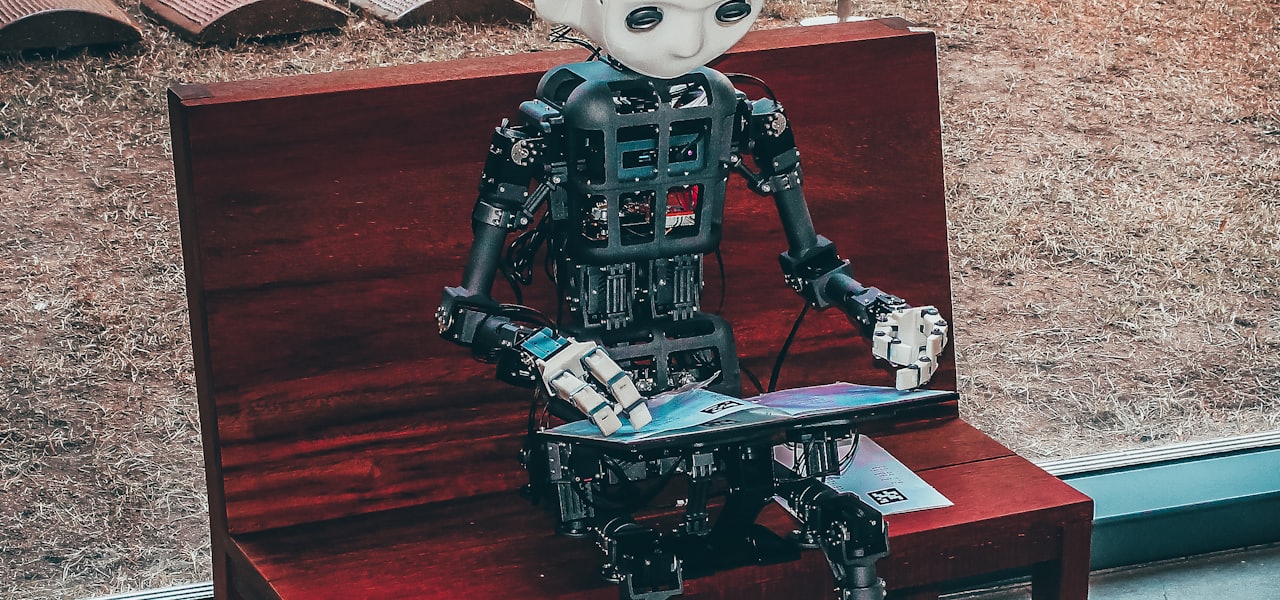
Cognitive robotics or cognitive technology is a subfield of robotics concerned with endowing a robot with intelligent behavior by providing it with a processing architecture that will allow it to learn and reason about how to behave in response to complex goals in a complex world. Cognitive robotics may be considered the engineering branch of embodied cognitive science and embodied embedded cognition, consisting of robotic process automation, artificial intelligence, machine learning, deep learning, optical character recognition, image processing, process mining, analytics, software development and system integration. == Core issues == While traditional cognitive modeling approaches have assumed symbolic coding schemes as a means for depicting the world, translating the world into these kinds of symbolic representations has proven to be problematic if not untenable. Perception and action and the notion of symbolic representation are therefore core issues to be addressed in cognitive robotics. == Starting point == Cognitive robotics views human or animal cognition as a starting point for the development of robotic information processing, as opposed to more traditional artificial intelligence techniques. Target robotic cognitive capabilities include perception processing, attention allocation, anticipation, planning, complex motor coordination, reasoning about other agents and perhaps even about their own mental states. Robotic cognition embodies the behavior of intelligent agents in the physical world (or a virtual world, in the case of simulated cognitive robotics). Ultimately, the robot must be able to act in the real world. == Learning techniques == === Motor Babble === A preliminary robot learning technique called motor babbling involves correlating pseudo-random complex motor movements by the robot with resulting visual and/or auditory feedback such that the robot may begin to expect a pattern of sensory feedback given a pattern of motor output. Desired sensory feedback may then be used to inform a motor control signal. This is thought to be analogous to how a baby learns to reach for objects or learns to produce speech sounds. For simpler robot systems, where, for instance, inverse kinematics may feasibly be used to transform anticipated feedback (desired motor result) into motor output, this step may be skipped. === Imitation === Once a robot can coordinate its motors to produce a desired result, the technique of learning by imitation may be used. The robot monitors the performance of another agent and then the robot tries to imitate that agent. It is often a challenge to transform imitation information from a complex scene into a desired motor result for the robot. Note that imitation is a high-level form of cognitive behavior and imitation is not necessarily required in a basic model of embodied animal cognition. === Knowledge acquisition === A more complex learning approach is "autonomous knowledge acquisition": the robot is left to explore the environment on its own. A system of goals and beliefs is typically assumed. A somewhat more directed mode of exploration can be achieved by "curiosity" algorithms, such as Intelligent Adaptive Curiosity or Category-Based Intrinsic Motivation. These algorithms generally involve breaking sensory input into a finite number of categories and assigning some sort of prediction system (such as an artificial neural network) to each. The prediction system keeps track of the error in its predictions over time. Reduction in prediction error is considered learning. The robot then preferentially explores categories in which it is learning (or reducing prediction error) the fastest. == Other architectures == Some researchers in cognitive robotics have tried using architectures such as (ACT-R and Soar (cognitive architecture)) as a basis of their cognitive robotics programs. These highly modular symbol-processing architectures have been used to simulate operator performance and human performance when modeling simplistic and symbolized laboratory data. The idea is to extend these architectures to handle real-world sensory input as that input continuously unfolds through time. What is needed is a way to somehow translate the world into a set of symbols and their relationships. == Questions == Some of the fundamental questions to be answered in cognitive robotics are: How much human programming should or can be involved to support the learning processes? How can one quantify progress? Some of the adopted ways are reward and punishment. But what kind of reward and what kind of punishment? In humans, when teaching a child, for example, the reward would be candy or some encouragement, and the punishment can take many forms. But what is an effective way with robots?
Hyperparameter optimization
In machine learning, hyperparameter optimization or tuning is the problem of choosing a set of optimal hyperparameters for a learning algorithm. A hyperparameter is a parameter whose value is used to control the learning process, which must be configured before the process starts. Hyperparameter optimization determines the set of hyperparameters that yields an optimal model which minimizes a predefined loss function on a given data set. The objective function takes a set of hyperparameters and returns the associated loss. Cross-validation is often used to estimate this generalization performance, and therefore choose the set of values for hyperparameters that maximize it. == Approaches == === Grid search === The traditional method for hyperparameter optimization has been grid search, or a parameter sweep, which is simply an exhaustive searching through a manually specified subset of the hyperparameter space of a learning algorithm. A grid search algorithm must be guided by some performance metric, typically measured by cross-validation on the training set or evaluation on a hold-out validation set. Since the parameter space of a machine learner may include real-valued or unbounded value spaces for certain parameters, manually set bounds and discretization may be necessary before applying grid search. For example, a typical soft-margin SVM classifier equipped with an RBF kernel has at least two hyperparameters that need to be tuned for good performance on unseen data: a regularization constant C and a kernel hyperparameter γ. Both parameters are continuous, so to perform grid search, one selects a finite set of "reasonable" values for each, say C ∈ { 10 , 100 , 1000 } {\displaystyle C\in \{10,100,1000\}} γ ∈ { 0.1 , 0.2 , 0.5 , 1.0 } {\displaystyle \gamma \in \{0.1,0.2,0.5,1.0\}} Grid search then trains an SVM with each pair (C, γ) in the Cartesian product of these two sets and evaluates their performance on a held-out validation set (or by internal cross-validation on the training set, in which case multiple SVMs are trained per pair). Finally, the grid search algorithm outputs the settings that achieved the highest score in the validation procedure. Grid search suffers from the curse of dimensionality, but is often embarrassingly parallel because the hyperparameter settings it evaluates are typically independent of each other. === Random search === Random Search replaces the exhaustive enumeration of all combinations by selecting them randomly. This can be simply applied to the discrete setting described above, but also generalizes to continuous and mixed spaces. A benefit over grid search is that random search can explore many more values than grid search could for continuous hyperparameters. It can outperform Grid search, especially when only a small number of hyperparameters affects the final performance of the machine learning algorithm. In this case, the optimization problem is said to have a low intrinsic dimensionality. Random Search is also embarrassingly parallel, and additionally allows the inclusion of prior knowledge by specifying the distribution from which to sample. Despite its simplicity, random search remains one of the important base-lines against which to compare the performance of new hyperparameter optimization methods. === Bayesian optimization === Bayesian optimization is a global optimization method for noisy black-box functions. Applied to hyperparameter optimization, Bayesian optimization builds a probabilistic model of the function mapping from hyperparameter values to the objective evaluated on a validation set. By iteratively evaluating a promising hyperparameter configuration based on the current model, and then updating it, Bayesian optimization aims to gather observations revealing as much information as possible about this function and, in particular, the location of the optimum. It tries to balance exploration (hyperparameters for which the outcome is most uncertain) and exploitation (hyperparameters expected close to the optimum). In practice, Bayesian optimization has been shown to obtain better results in fewer evaluations compared to grid search and random search, due to the ability to reason about the quality of experiments before they are run. === Gradient-based optimization === For specific learning algorithms, it is possible to compute the gradient with respect to hyperparameters and then optimize the hyperparameters using gradient descent. The first usage of these techniques was focused on neural networks. Since then, these methods have been extended to other models such as support vector machines or logistic regression. A different approach in order to obtain a gradient with respect to hyperparameters consists in differentiating the steps of an iterative optimization algorithm using automatic differentiation. A more recent work along this direction uses the implicit function theorem to calculate hypergradients and proposes a stable approximation of the inverse Hessian. The method scales to millions of hyperparameters and requires constant memory. In a different approach, a hypernetwork is trained to approximate the best response function. One of the advantages of this method is that it can handle discrete hyperparameters as well. Self-tuning networks offer a memory efficient version of this approach by choosing a compact representation for the hypernetwork. More recently, Δ-STN has improved this method further by a slight reparameterization of the hypernetwork which speeds up training. Δ-STN also yields a better approximation of the best-response Jacobian by linearizing the network in the weights, hence removing unnecessary nonlinear effects of large changes in the weights. Apart from hypernetwork approaches, gradient-based methods can be used to optimize discrete hyperparameters also by adopting a continuous relaxation of the parameters. Such methods have been extensively used for the optimization of architecture hyperparameters in neural architecture search. === Evolutionary optimization === Evolutionary optimization is a methodology for the global optimization of noisy black-box functions. In hyperparameter optimization, evolutionary optimization uses evolutionary algorithms to search the space of hyperparameters for a given algorithm. Evolutionary hyperparameter optimization follows a process inspired by the biological concept of evolution: Create an initial population of random solutions (i.e., randomly generate tuples of hyperparameters, typically 100+) Evaluate the hyperparameter tuples and acquire their fitness function (e.g., 10-fold cross-validation accuracy of the machine learning algorithm with those hyperparameters) Rank the hyperparameter tuples by their relative fitness Replace the worst-performing hyperparameter tuples with new ones generated via crossover and mutation Repeat steps 2-4 until satisfactory algorithm performance is reached or is no longer improving. Evolutionary optimization has been used in hyperparameter optimization for statistical machine learning algorithms, automated machine learning, typical neural network and deep neural network architecture search, as well as training of the weights in deep neural networks. === Population-based === Population Based Training (PBT) learns both hyperparameter values and network weights. Multiple learning processes operate independently, using different hyperparameters. As with evolutionary methods, poorly performing models are iteratively replaced with models that adopt modified hyperparameter values and weights based on the better performers. This replacement model warm starting is the primary differentiator between PBT and other evolutionary methods. PBT thus allows the hyperparameters to evolve and eliminates the need for manual hypertuning. The process makes no assumptions regarding model architecture, loss functions or training procedures. PBT and its variants are adaptive methods: they update hyperparameters during the training of the models. On the contrary, non-adaptive methods have the sub-optimal strategy to assign a constant set of hyperparameters for the whole training. === Early stopping-based === A class of early stopping-based hyperparameter optimization algorithms is purpose-built for large search spaces of continuous and discrete hyperparameters, particularly when the computational cost to evaluate the performance of a set of hyperparameters is high. Irace implements the iterated racing algorithm, that focuses the search around the most promising configurations, using statistical tests to discard the ones that perform poorly. Another early stopping hyperparameter optimization algorithm is successive halving (SHA), which begins as a random search but periodically prunes low-performing models, thereby focusing computational resources on more promising models. Asynchronous successive halving (ASHA) further improves upon SHA's resource utilization profile by removing the need to synchronously evaluate a
Leakage (machine learning)
In statistics and machine learning, leakage (also known as data leakage or target leakage) refers to the use of information during model training that would not be available at prediction time. This results in overly optimistic performance estimates, as the model appears to perform better during evaluation than it actually would in a production environment. Leakage is often subtle and indirect, making it difficult to detect and eliminate. It can lead a statistician or modeler to select a suboptimal model, which may be outperformed by a leakage-free alternative. == Leakage modes == Leakage can occur at multiple stages of the machine learning workflow. Broadly, its sources can be divided into two categories: those arising from features and those arising from training examples. === Feature leakage === Feature or column-wise leakage is caused by the inclusion of columns which are one of the following: a duplicate label, a proxy for the label, or the label itself. These features, known as anachronisms, will not be available when the model is used for predictions, and result in leakage if included when the model is trained. For example, including a "MonthlySalary" column when predicting "YearlySalary"; or "MinutesLate" when predicting "IsLate". === Training example leakage === Row-wise leakage is caused by improper sharing of information between rows of data. Types of row-wise leakage include: Premature featurization; leaking from premature featurization before Cross-validation/Train/Test split (must fit MinMax/ngrams/etc on only the train split, then transform the test set) Duplicate rows between train/validation/test (for example, oversampling a dataset to pad its size before splitting; or, different rotations/augmentations of a single image; bootstrap sampling before splitting; or duplicating rows to up sample the minority class) Non-independent and identically distributed random (non-IID) data Time leakage (for example, splitting a time-series dataset randomly instead of newer data in test set using a train/test split or rolling-origin cross-validation) Group leakage—not including a grouping split column (for example, Andrew Ng's group had 100k x-rays of 30k patients, meaning ~3 images per patient. The paper used random splitting instead of ensuring that all images of a patient were in the same split. Hence the model partially memorized the patients instead of learning to recognize pneumonia in chest x-rays.) A 2023 review found data leakage to be "a widespread failure mode in machine-learning (ML)-based science", having affected at least 294 academic publications across 17 disciplines, and causing a potential reproducibility crisis. == Detection == Data leakage in machine learning can be detected through various methods, focusing on performance analysis, feature examination, data auditing, and model behavior analysis. Performance-wise, unusually high accuracy or significant discrepancies between training and test results often indicate leakage. Inconsistent cross-validation outcomes may also signal issues. Feature examination involves scrutinizing feature importance rankings and ensuring temporal integrity in time series data. A thorough audit of the data pipeline is crucial, reviewing pre-processing steps, feature engineering, and data splitting processes. Detecting duplicate entries across dataset splits is also important. For language models, the Min-K% method can detect the presence of data in a pretraining dataset. It presents a sentence suspected to be present in the pretraining dataset, and computes the log-likelihood of each token, then compute the average of the lowest K of these. If this exceeds a threshold, then the sentence is likely present. This method is improved by comparing against a baseline of the mean and variance. Analyzing model behavior can reveal leakage. Models relying heavily on counter-intuitive features or showing unexpected prediction patterns warrant investigation. Performance degradation over time when tested on new data may suggest earlier inflated metrics due to leakage. Advanced techniques include backward feature elimination, where suspicious features are temporarily removed to observe performance changes. Using a separate hold-out dataset for final validation before deployment is advisable.
Non-native speech database
A non-native speech database is a speech database of non-native pronunciations of English. Such databases are used in the development of: multilingual automatic speech recognition systems, text to speech systems, pronunciation trainers, and second language learning systems. == List == The actual table with information about the different databases is shown in Table 2. === Legend === In the table of non-native databases some abbreviations for language names are used. They are listed in Table 1. Table 2 gives the following information about each corpus: The name of the corpus, the institution where the corpus can be obtained, or at least further information should be available, the language which was actually spoken by the speakers, the number of speakers, the native language of the speakers, the total amount of non-native utterances the corpus contains, the duration in hours of the non-native part, the date of the first public reference to this corpus, some free text highlighting special aspects of this database and a reference to another publication. The reference in the last field is in most cases to the paper which is especially devoted to describe this corpus by the original collectors. In some cases it was not possible to identify such a paper. In these cases a paper is referenced which is using this corpus is. Some entries are left blank and others are marked with unknown. The difference here is that blank entries refer to attributes where the value is just not known. Unknown entries, however, indicate that no information about this attribute is available in the database itself. As an example, in the Jupiter weather database no information about the origin of the speakers is given. Therefore this data would be less useful for verifying accent detection or similar issues. Where possible, the name is a standard name of the corpus, for some of the smaller corpora, however, there was no established name and hence an identifier had to be created. In such cases, a combination of the institution and the collector of the database is used. In the case where the databases contain native and non-native speech, only attributes of the non-native part of the corpus are listed. Most of the corpora are collections of read speech. If the corpus instead consists either partly or completely of spontaneous utterances, this is mentioned in the Specials column.
Reparameterization trick
The reparameterization trick (aka "reparameterization gradient estimator") is a technique used in statistical machine learning, particularly in variational inference, variational autoencoders, and stochastic optimization. It allows for the efficient computation of gradients through random variables, enabling the optimization of parametric probability models using stochastic gradient descent, and the variance reduction of estimators. It was developed in the 1980s in operations research, under the name of "pathwise gradients", or "stochastic gradients". Its use in variational inference was proposed in 2013. == Mathematics == Let z {\displaystyle z} be a random variable with distribution q ϕ ( z ) {\displaystyle q_{\phi }(z)} , where ϕ {\displaystyle \phi } is a vector containing the parameters of the distribution. === REINFORCE estimator === Consider an objective function of the form: L ( ϕ ) = E z ∼ q ϕ ( z ) [ f ( z ) ] {\displaystyle L(\phi )=\mathbb {E} _{z\sim q_{\phi }(z)}[f(z)]} Without the reparameterization trick, estimating the gradient ∇ ϕ L ( ϕ ) {\displaystyle \nabla _{\phi }L(\phi )} can be challenging, because the parameter appears in the random variable itself. In more detail, we have to statistically estimate: ∇ ϕ L ( ϕ ) = ∇ ϕ ∫ d z q ϕ ( z ) f ( z ) {\displaystyle \nabla _{\phi }L(\phi )=\nabla _{\phi }\int dz\;q_{\phi }(z)f(z)} The REINFORCE estimator, widely used in reinforcement learning and especially policy gradient, uses the following equality: ∇ ϕ L ( ϕ ) = ∫ d z q ϕ ( z ) ∇ ϕ ( ln q ϕ ( z ) ) f ( z ) = E z ∼ q ϕ ( z ) [ ∇ ϕ ( ln q ϕ ( z ) ) f ( z ) ] {\displaystyle \nabla _{\phi }L(\phi )=\int dz\;q_{\phi }(z)\nabla _{\phi }(\ln q_{\phi }(z))f(z)=\mathbb {E} _{z\sim q_{\phi }(z)}[\nabla _{\phi }(\ln q_{\phi }(z))f(z)]} This allows the gradient to be estimated: ∇ ϕ L ( ϕ ) ≈ 1 N ∑ i = 1 N ∇ ϕ ( ln q ϕ ( z i ) ) f ( z i ) {\displaystyle \nabla _{\phi }L(\phi )\approx {\frac {1}{N}}\sum _{i=1}^{N}\nabla _{\phi }(\ln q_{\phi }(z_{i}))f(z_{i})} The REINFORCE estimator has high variance, and many methods were developed to reduce its variance. === Reparameterization estimator === The reparameterization trick expresses z {\displaystyle z} as: z = g ϕ ( ϵ ) , ϵ ∼ p ( ϵ ) {\displaystyle z=g_{\phi }(\epsilon ),\quad \epsilon \sim p(\epsilon )} Here, g ϕ {\displaystyle g_{\phi }} is a deterministic function parameterized by ϕ {\displaystyle \phi } , and ϵ {\displaystyle \epsilon } is a noise variable drawn from a fixed distribution p ( ϵ ) {\displaystyle p(\epsilon )} . This gives: L ( ϕ ) = E ϵ ∼ p ( ϵ ) [ f ( g ϕ ( ϵ ) ) ] {\displaystyle L(\phi )=\mathbb {E} _{\epsilon \sim p(\epsilon )}[f(g_{\phi }(\epsilon ))]} Now, the gradient can be estimated as: ∇ ϕ L ( ϕ ) = E ϵ ∼ p ( ϵ ) [ ∇ ϕ f ( g ϕ ( ϵ ) ) ] ≈ 1 N ∑ i = 1 N ∇ ϕ f ( g ϕ ( ϵ i ) ) {\displaystyle \nabla _{\phi }L(\phi )=\mathbb {E} _{\epsilon \sim p(\epsilon )}[\nabla _{\phi }f(g_{\phi }(\epsilon ))]\approx {\frac {1}{N}}\sum _{i=1}^{N}\nabla _{\phi }f(g_{\phi }(\epsilon _{i}))} == Examples == For some common distributions, the reparameterization trick takes specific forms: Normal distribution: For z ∼ N ( μ , σ 2 ) {\displaystyle z\sim {\mathcal {N}}(\mu ,\sigma ^{2})} , we can use: z = μ + σ ϵ , ϵ ∼ N ( 0 , 1 ) {\displaystyle z=\mu +\sigma \epsilon ,\quad \epsilon \sim {\mathcal {N}}(0,1)} Exponential distribution: For z ∼ Exp ( λ ) {\displaystyle z\sim {\text{Exp}}(\lambda )} , we can use: z = − 1 λ log ( ϵ ) , ϵ ∼ Uniform ( 0 , 1 ) {\displaystyle z=-{\frac {1}{\lambda }}\log(\epsilon ),\quad \epsilon \sim {\text{Uniform}}(0,1)} Discrete distribution can be reparameterized by the Gumbel distribution (Gumbel-softmax trick or "concrete distribution") and diffusion models. In general, any distribution that is differentiable with respect to its parameters can be reparameterized by inverting the multivariable CDF function, then apply the implicit method. See for an exposition and application to the Gamma, Beta, Dirichlet, and von Mises distributions. == Applications == === Variational autoencoder === In Variational Autoencoders (VAEs), the VAE objective function, known as the Evidence Lower Bound (ELBO), is given by: ELBO ( ϕ , θ ) = E z ∼ q ϕ ( z | x ) [ log p θ ( x | z ) ] − D KL ( q ϕ ( z | x ) | | p ( z ) ) {\displaystyle {\text{ELBO}}(\phi ,\theta )=\mathbb {E} _{z\sim q_{\phi }(z|x)}[\log p_{\theta }(x|z)]-D_{\text{KL}}(q_{\phi }(z|x)||p(z))} where q ϕ ( z | x ) {\displaystyle q_{\phi }(z|x)} is the encoder (recognition model), p θ ( x | z ) {\displaystyle p_{\theta }(x|z)} is the decoder (generative model), and p ( z ) {\displaystyle p(z)} is the prior distribution over latent variables. The gradient of ELBO with respect to θ {\displaystyle \theta } is simply E z ∼ q ϕ ( z | x ) [ ∇ θ log p θ ( x | z ) ] ≈ 1 L ∑ l = 1 L ∇ θ log p θ ( x | z l ) {\displaystyle \mathbb {E} _{z\sim q_{\phi }(z|x)}[\nabla _{\theta }\log p_{\theta }(x|z)]\approx {\frac {1}{L}}\sum _{l=1}^{L}\nabla _{\theta }\log p_{\theta }(x|z_{l})} but the gradient with respect to ϕ {\displaystyle \phi } requires the trick. Express the sampling operation z ∼ q ϕ ( z | x ) {\displaystyle z\sim q_{\phi }(z|x)} as: z = μ ϕ ( x ) + σ ϕ ( x ) ⊙ ϵ , ϵ ∼ N ( 0 , I ) {\displaystyle z=\mu _{\phi }(x)+\sigma _{\phi }(x)\odot \epsilon ,\quad \epsilon \sim {\mathcal {N}}(0,I)} where μ ϕ ( x ) {\displaystyle \mu _{\phi }(x)} and σ ϕ ( x ) {\displaystyle \sigma _{\phi }(x)} are the outputs of the encoder network, and ⊙ {\displaystyle \odot } denotes element-wise multiplication. Then we have ∇ ϕ ELBO ( ϕ , θ ) = E ϵ ∼ N ( 0 , I ) [ ∇ ϕ log p θ ( x | z ) + ∇ ϕ log q ϕ ( z | x ) − ∇ ϕ log p ( z ) ] {\displaystyle \nabla _{\phi }{\text{ELBO}}(\phi ,\theta )=\mathbb {E} _{\epsilon \sim {\mathcal {N}}(0,I)}[\nabla _{\phi }\log p_{\theta }(x|z)+\nabla _{\phi }\log q_{\phi }(z|x)-\nabla _{\phi }\log p(z)]} where z = μ ϕ ( x ) + σ ϕ ( x ) ⊙ ϵ {\displaystyle z=\mu _{\phi }(x)+\sigma _{\phi }(x)\odot \epsilon } . This allows us to estimate the gradient using Monte Carlo sampling: ∇ ϕ ELBO ( ϕ , θ ) ≈ 1 L ∑ l = 1 L [ ∇ ϕ log p θ ( x | z l ) + ∇ ϕ log q ϕ ( z l | x ) − ∇ ϕ log p ( z l ) ] {\displaystyle \nabla _{\phi }{\text{ELBO}}(\phi ,\theta )\approx {\frac {1}{L}}\sum _{l=1}^{L}[\nabla _{\phi }\log p_{\theta }(x|z_{l})+\nabla _{\phi }\log q_{\phi }(z_{l}|x)-\nabla _{\phi }\log p(z_{l})]} where z l = μ ϕ ( x ) + σ ϕ ( x ) ⊙ ϵ l {\displaystyle z_{l}=\mu _{\phi }(x)+\sigma _{\phi }(x)\odot \epsilon _{l}} and ϵ l ∼ N ( 0 , I ) {\displaystyle \epsilon _{l}\sim {\mathcal {N}}(0,I)} for l = 1 , … , L {\displaystyle l=1,\ldots ,L} . This formulation enables backpropagation through the sampling process, allowing for end-to-end training of the VAE model using stochastic gradient descent or its variants. === Variational inference === More generally, the trick allows using stochastic gradient descent for variational inference. Let the variational objective (ELBO) be of the form: ELBO ( ϕ ) = E z ∼ q ϕ ( z ) [ log p ( x , z ) − log q ϕ ( z ) ] {\displaystyle {\text{ELBO}}(\phi )=\mathbb {E} _{z\sim q_{\phi }(z)}[\log p(x,z)-\log q_{\phi }(z)]} Using the reparameterization trick, we can estimate the gradient of this objective with respect to ϕ {\displaystyle \phi } : ∇ ϕ ELBO ( ϕ ) ≈ 1 L ∑ l = 1 L ∇ ϕ [ log p ( x , g ϕ ( ϵ l ) ) − log q ϕ ( g ϕ ( ϵ l ) ) ] , ϵ l ∼ p ( ϵ ) {\displaystyle \nabla _{\phi }{\text{ELBO}}(\phi )\approx {\frac {1}{L}}\sum _{l=1}^{L}\nabla _{\phi }[\log p(x,g_{\phi }(\epsilon _{l}))-\log q_{\phi }(g_{\phi }(\epsilon _{l}))],\quad \epsilon _{l}\sim p(\epsilon )} === Dropout === The reparameterization trick has been applied to reduce the variance in dropout, a regularization technique in neural networks. The original dropout can be reparameterized with Bernoulli distributions: y = ( W ⊙ ϵ ) x , ϵ i j ∼ Bernoulli ( α i j ) {\displaystyle y=(W\odot \epsilon )x,\quad \epsilon _{ij}\sim {\text{Bernoulli}}(\alpha _{ij})} where W {\displaystyle W} is the weight matrix, x {\displaystyle x} is the input, and α i j {\displaystyle \alpha _{ij}} are the (fixed) dropout rates. More generally, other distributions can be used than the Bernoulli distribution, such as the gaussian noise: y i = μ i + σ i ⊙ ϵ i , ϵ i ∼ N ( 0 , I ) {\displaystyle y_{i}=\mu _{i}+\sigma _{i}\odot \epsilon _{i},\quad \epsilon _{i}\sim {\mathcal {N}}(0,I)} where μ i = m i ⊤ x {\displaystyle \mu _{i}=\mathbf {m} _{i}^{\top }x} and σ i 2 = v i ⊤ x 2 {\displaystyle \sigma _{i}^{2}=\mathbf {v} _{i}^{\top }x^{2}} , with m i {\displaystyle \mathbf {m} _{i}} and v i {\displaystyle \mathbf {v} _{i}} being the mean and variance of the i {\displaystyle i} -th output neuron. The reparameterization trick can be applied to all such cases, resulting in the variational dropout method.