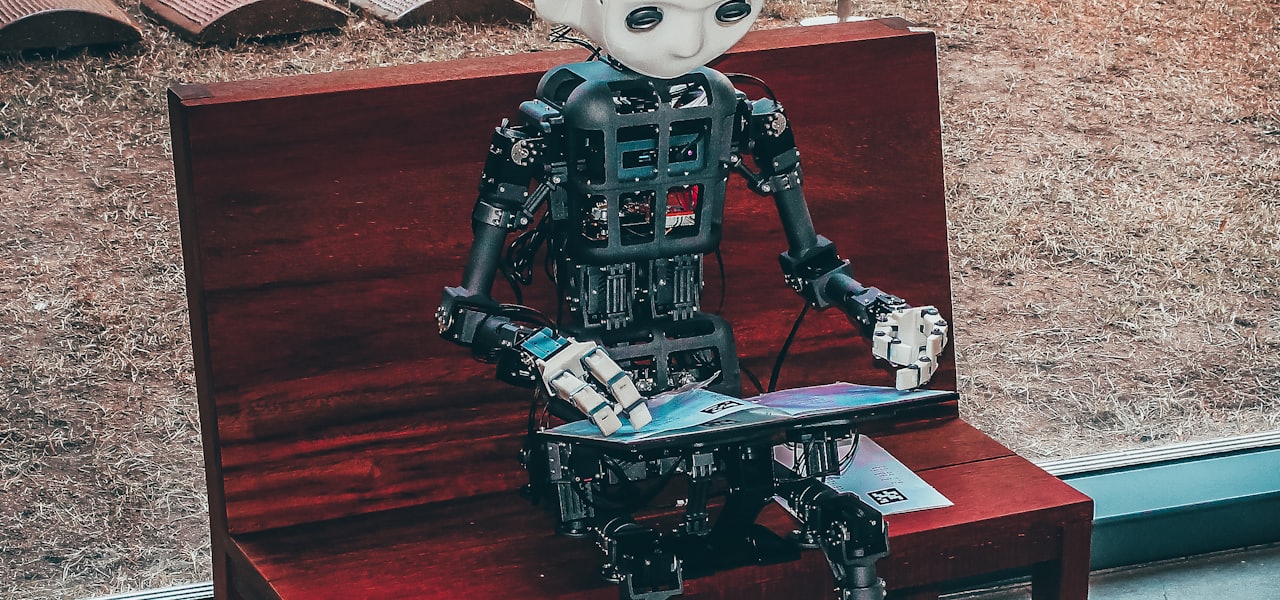
Trying to pick the best AI sales assistant? An AI sales assistant is software that uses machine learning to help you get more done — it scales effortlessly from a single task to thousands. The best picks balance beginner-friendly simplicity with the depth power users need, and they ship updates often. Whether you are a beginner or a pro, the right AI sales assistant slots into your workflow and pays for itself fast. Read on for hands-on impressions, pricing tiers, and the standout features that matter.
Smartphone kill switch
A smartphone kill switch is a software-based security feature that allows a smartphone's owner to remotely render it inoperable if it is lost or stolen, thereby deterring theft. There have been a number of initiatives to legally require kill switches on smartphones. Smartphones have high resale value, and are therefore often the target of theft, with thieves selling them to cartels for resale. A kill switch can deter theft by making devices worthless. == Legal requirements == In the United States, Minnesota was the first state to pass a bill requiring smartphones to have such a feature, and California was the first to require that the feature be turned on by default. The California law requires the kill switch to be resistant to reinstallation of the phone's operating system. The CTIA initially resisted the legislation, fearing that it would make phones easier to hack, but later supported kill switches. There is evidence that this legislation has been effective, with smartphone theft declining by 50% between 2013 and 2017 in San Francisco. Secure Our Smartphones (S.O.S.), a New York State and San Francisco initiative started by New York State Attorney General Eric Schneiderman and San Francisco District Attorney George Gascón. The initiative is co-chaired by Schneiderman, Gascón and Boris Johnson, and has 105 members. == Examples == An Android phone signed into a Google account can be remotely locked and erased via Google's Find My Device service, as long as it is connected to the Internet. To prevent this, a thief must sign the device out of Google before the owner locks or erases it. iPhones have a similar service.
Path tracing
Path tracing is a rendering algorithm in computer graphics that simulates how light interacts with objects and participating media to generate realistic (physically plausible) images. It is based on earlier, more limited, ray tracing algorithms. Path tracing is used to create photorealistic images for artistic purposes, and for applications such as architectural rendering and product design. It is also used to render frames for animated films, and visual effects for film and television. Because it can be very accurate and unbiased, it is commonly used to generate reference images when testing the quality of other rendering algorithms. The technique uses the Monte Carlo method to compute estimates of global illumination and simulate the ways different materials reflect (or scatter), transmit, absorb, and emit light. It can incorporate simple modeling of the effects of aperture and lens (depth of field, and bokeh) and shutter speed (motion blur), or more realistic simulation of the optical components in a camera. The algorithm works by describing illumination in a scene using the rendering equation, or light transport equation, and finding an approximate solution using Monte Carlo integration. An inefficient (but accurate) version of the algorithm can be very simple, and involves tracing a ray from the camera, allowing this ray to bounce in random directions as it hits different objects in the scene, and computing the amount of light transmitted along the path to the camera whenever the path encounters a light source. This process is repeated many times for each pixel (each repetition, with generated path and transmitted light, is called a sample), and the results are averaged. One main difference between this algorithm and standard ray tracing is that a single unbranching path is traced each time, while "Whitted-style" or "Cook-style" ray tracing recursively samples branching paths (e.g. when light is both reflected and refracted by a glass object). More practical versions incorporate improvements such as quasi-Monte Carlo methods (techniques that distribute samples more evenly), importance sampling (take more samples of paths that are likely to transport more light), and next event estimation (allow a very limited form of branching, and sample additional paths that connect to the lights more directly). Because path tracing uses random samples there is noise in the final image, which decreases as more samples are taken. Images commonly require many thousands of samples per pixel (spp) to reduce noise to an acceptable level, and denoising techniques (e.g. based on neural networks) are often used. Denoising is usually necessary when path tracing is used for real-time rendering in video games, because relatively few samples can be taken. Many alternative algorithms for path tracing have been developed, although they do not always outperform more straightforward implementations. These include bidirectional path tracing (which traces paths forwards from the light source as well as backwards from the camera), Metropolis light transport, and ways of combining path tracing with photon mapping. Video games often use biased versions of path tracing to improve performance (e.g. limiting the number of bounces in each path). A family of techniques called ReSTIR has been developed that can help real-time path tracing by sharing data between nearby pixels and consecutive frames. == History == Like all ray tracing methods, path tracing is based on ray casting, which Arthur Appel used for computer graphics rendering in the late 1960s. In 1980, John Turner Whitted published a recursive ray tracing algorithm that allows rendering images of scenes containing mirrored surfaces and refractive transparent objects. In 1984, Cook et al. described a form of ray tracing called distributed ray tracing, which uses Monte Carlo integration to render effects such as depth of field, motion blur, reflection from rough surfaces, and area lights. The same year, the radiosity method (not a ray tracing method) was published, which was the first physically based method for rendering diffuse global illumination. In 1986, Jim Kajiya published a paper exploring how to use distributed ray tracing to render physically-based global illumination, and this paper also introduced and named the method called "path tracing". Path tracing and other distributed ray tracing techniques were further refined in the late 1980s and early 1990s by researchers such as James Arvo and Peter Shirley, and by Greg Ward in the open source Radiance software. Despite being theoretically able to render any lighting, the original form of path tracing can sometimes be very inefficient (or noisy) for rendering light that is reflected or refracted before illuminating a visible surface, including diffuse global illumination where light enters an area through narrow gaps, because it traces paths only from the camera. To address this, variations of path tracing that trace paths from both the camera and from light sources, called bidirectional path tracing, were published in 1993 by Eric Lafortune and Yves Willems, and in 1997 by Eric Veach and Leonidas Guibas. In 1997 Veach and Guibas also published an alternative method called Metropolis light transport, which combines bidirectional path tracing with the Metropolis method. Veach's lengthy Ph.D. dissertation described both techniques, along with the theoretical background of path tracing; later, the book Physically Based Rendering (which won an Academy Award for Technical Achievement in 2014) helped to make information about path tracing more widely available. Path tracing requires tracing a large number of paths of light in order to produce an image with a visually acceptable amount of noise. This made path tracing very slow on computers available in the 1980s and 1990s, and noise remained a problem when trying to reproduce the style of earlier computer graphics animated films. Most animated films produced until around 2010, by studios such as Pixar, used rasterization-based rendering, with ray tracing used selectively for reflections (and later for precomputed or cached global illumination). However the speed of computers rapidly increased during the 1990s. Blue Sky Studios pioneered using Monte Carlo ray tracing for global illumination in animation, including in the 1998 short film "Bunny", but they did not disclose the precise techniques used. Path tracing gradually become more practical for film production in the early 2000s. The Arnold renderer, developed by Marcos Fajardo, was used by Sony Pictures Imageworks to produce the feature-length film Monster House, released in 2006. Pixar rewrote their RenderMan software to use path tracing, and released their first feature-length path-traced film Finding Dory in 2016. Although path tracing still had a large computational cost, animation studios discovered that less human labor was required when using it, for example because global illumination no longer needed to be faked by manually placing lights. The amount of noise present in path traced images still caused difficulties, particularly when rendering motion blur (which was used extensively by earlier animated films) but denoising techniques were developed to address this. New techniques were also needed for rendering hair and fur, and to handle the extremely large scenes sometimes required by films. Renderers such as Arnold, and Disney's Hyperion, originally only used CPUs for rendering, but as GPUs became more capable (and APIs such as CUDA, OpenCL, and OptiX were released) researchers and developers began adapting algorithms and implementations to use GPUs. GPUs can dramatically reduce rendering time: for example using a high-end GPU to accelerate portions of the rendering code can make it over 30 times faster than using only a high-end CPU. == Description == Kajiya's 1986 paper defined a recursive integral equation called the rendering equation, which describes a simplified form of light transport. Using Monte Carlo integration for the integral on the right side of the equation leads fairly directly to the path tracing algorithm: I ( x , x ′ ) = g ( x , x ′ ) [ ϵ ( x , x ′ ) + ∫ S ρ ( x , x ′ , x ″ ) I ( x ′ , x ″ ) d x ″ ] {\displaystyle I(x,x')=g(x,x')\left[\epsilon (x,x')+\int _{S}\rho (x,x',x'')I(x',x'')dx''\right]} This expresses I(x,x'), the light arriving at point x from point x', as the product of a geometry term, g(x,x'), which is 0 if there is something blocking the light between the two points and 1 otherwise, and the amount of light leaving point x' and traveling towards x. The light leaving point x' is the sum of the light emitted by the surface at x', and the integral of the light arriving at x' from all other points in the scene (the integration domain S) and being reflected towards x. The factor ρ(x,x',x''), which calculates how much light is reflected, must take into account the angles at which the light is arriving and leaving, and
GoodRx
GoodRx Holdings, Inc. is an American healthcare company that operates a telemedicine platform and free-to-use website and mobile app that track prescription drug prices in the United States and provide drug coupons for discounts on medications. GoodRx compares prescription drug prices at more than 75,000 pharmacies in the United States. The platform allows users to consult a doctor online and obtain a prescription for certain types of medications. == History == === Financial performance === GoodRx was founded in Santa Monica, California in 2011. GoodRx experienced substantial growth in net income in 2017 ($9 million), 2018 ($44 million), and 2019 ($66 million), but recorded a loss of $293.6 million in 2020 due to IPO-related expenses. In September 2020, GoodRx went public on the Nasdaq under the ticker symbol GDRX. The company priced its initial public offering at $33 per share, above the expected range of $24 to $28, raising more than $1.1 billion at an initial valuation of approximately $12.7 billion. In the first half of 2020, the company reported revenues of $257 million and net income of $55 million. GoodRx generated $745.4 million in revenue for the full year 2021, a 35.36% increase over 2020. During the first half of 2021, the company’s share price declined by 10.7%. The decline was attributed to increased competition in online pharmacy services and slower user growth. GoodRx reported full-year revenue of $766.6 million, with adjusted EBITDA reaching $213.5 million, exceeding guidance in the fourth quarter. GoodRx reported that 41% of prescriptions filled using its coupons were newly adherent, meaning they would not have been filled without the service. GoodRx reported a full-year 2023 revenue of $750.3 million, a decrease of 2.1% from 2022. However, its fourth-quarter revenue increased by 7% year-over-year. GoodRx achieved an Adjusted EBITDA of $217.4 million for the year and an Adjusted EBITDA Margin of 28.6%. In 2024, GoodRx achieved 6% revenue growth with $792.3 million for the full year and turned a net loss into a positive net income of $16.4 million. The company also demonstrated strong operational efficiency, with a 32.8% increase in full-year Adjusted EBITDA. In Q2 2025, GoodRx reported revenue of $203.1 million, a 1.2% increase from the previous year, and a net income of $12.8 million, a significant 92% jump, which resulted in a 6.3% net income margin. However, prescription transaction revenue declined by 3% due to a decrease in monthly active consumers, but this was offset by strong 32% growth in its Pharma Manufacturer Solutions business. GoodRx also saw a 7% decrease in subscription revenue. === Mergers and acquisitions === In 2019, GoodRx acquired HeyDoctor, a telemedicine company, to integrate virtual healthcare services into the platform. In 2021, a health video content producer, HealthiNation was acquired by GoodRx, which helped provide consumers with health information and offered pharmaceutical manufacturers new ways to reach relevant audiences. In April 2022, GoodRx acquired VitaCare Prescription Services from TherapeuticsMD to strengthen its pharma manufacturer solutions business. === Partnerships === In 2017, the company announced partnerships with major pharmaceutical companies to negotiate lower prescription drug costs. GoodRx has deep relationships with major pharmacy chains, including Walgreens, Walmart, CVS Caremark, and Publix, to allow customers to use GoodRx discounts and Gold benefits. GoodRx began its partnership with CVS Caremark in July 2023 to automatically apply coupons to insured CVS customers purchasing generic prescriptions at certain locations. In April 2024, GoodRx added Publix into its network, allowing GoodRx Gold members to use their cards at Publix Pharmacies. GoodRx partners with Pharmacy Benefit Management like Caremark, Express Scripts, and MedImpact to apply their savings directly to eligible insurance plans and members. GoodRx partners with companies like Affirm, Benefitfocus, and DoorDash to integrate their services that offer members discounts and financial flexibility for prescriptions. GoodRx also partners with organizations like the American Academy of Family Physicians Foundation to support broader access to care. In October 2022, GoodRx launched Provider Mode, which allows healthcare providers to use the app to compare costs of drugs for patients based on different payment methods and drug alternatives. In 2025, GoodRx partnered with Novo Nordisk to offer discounted cash-pay access to semaglutide products like Ozempic and Wegovy through its platform and participating pharmacies. == Products and services == GoodRx started its telemedicine service GoodRx Care in September 2019. It lets people talk to a licensed provider online for common issues and get prescriptions even if they don't have insurance. They also run condition-specific subscription plans that bundle online doctor visits, FDA-approved meds, and home delivery into one monthly payment. On the weight management side, GoodRx offers prescriptions for GLP-1 drugs like semaglutide through their telemedicine platform. This got a boost when the oral version of Wegovy became widely available in the US in early 2026. GoodRx works with drug makers like Novo Nordisk to make some medications (including semaglutide options) more affordable for people paying cash. The telemedicine part took off after GoodRx bought HeyDoctor in 2019 and brought their virtual care tools into the main platform. == Key people == The Santa Monica-based startup was founded in September 2011 by Trevor Bezdek and former Facebook executives Doug Hirsch and Scott Marlette. Marlette was one of the first 20 employees at Facebook and built Facebook's photo application. In 2005, Hirsch was the Vice President of Product at Facebook, working closely with Mark Zuckerberg. Bezdek and Hirsch served as co-chief executive officers until April 2023, when they stepped down from those roles and technology executive Scott Wagner was appointed interim chief executive officer. Bezdek became chair of the board, while Hirsch took on the role of chief mission officer. In December 2024, GoodRx announced that healthcare executive Wendy Barnes would become president and chief executive officer effective January 1, 2025. As of 2025, Barnes serves as the company’s CEO, while Trevor Bezdek and Scott Wagner serve as co-chairs of the board, and Doug Hirsch remains involved as a co-founder and senior executive. == Controversy == On February 25, 2020, Consumer Reports published an article stating that GoodRx shared user data—specifically, pseudonymized advertising ID numbers that companies use to track the behavior of web users across websites, the names of the drugs that users browsed, and the pharmacies where users sought to fill prescriptions—with Google, Facebook, and around twenty other Internet-based companies. A few days later, GoodRx released a statement saying that it had made changes to prevent user search data on medical conditions and pharmaceuticals from being shared with Facebook. In March 2020, GoodRx stopped sending data about user prescriptions to Facebook. On February 1, 2023, the Federal Trade Commission fined GoodRx US$1.5 million for violations of the Breach Notification Rule and the Federal Trade Commission Act for allegedly failing to obtain specific, informed, and unambiguous consent from users before disclosing health-related information to Facebook and Google. In November 2024, independent pharmacies filed at least three class action lawsuits against GoodRx and major pharmacy benefit managers. The cases, brought by independent pharmacies in California, Michigan, Pennsylvania, and Rhode Island, allege that GoodRx and the PBMs collaborated to suppress reimbursements for generic prescription drugs. They allege that agreements using GoodRx’s software suppressed reimbursements for generic drugs and violated the Sherman Antitrust Act. The suits claim the practices amount to price fixing which harms small pharmacies while benefiting PBMs and their affiliates. GoodRx settled both the 2023 FTC action and the 2025 class action lawsuit without admitting wrongdoing.
Transparency in the software supply chain
Transparency in the software supply chain is a condition in which participants involved in the development, procurement, operation, auditing, or regulation of software can determine which components, dependencies, build stages, identifiers, and relationships within the supply chain make up the delivered product. The disclosure of information about software components, their interrelationships, origins, and development methods—for the purposes of risk management, vulnerability detection, and compliance—takes place throughout the software lifecycle. Transparency is one of the key security attributes of the software supply chain, as a deeper understanding of the chain enables participants to identify vulnerabilities and mitigate threats. Problems in the software supply chain can cause billions in losses and create operational challenges for government and commercial entities, as demonstrated by incidents involving SolarWinds, Bybit, 3CX, Jaguar Land Rover, GitHub, and NotPetya. Modern software is often assembled from third-party libraries and open-source components. According to research by the Linux Foundation and Synopsys, 96% of the commercial codebases analyzed contained open-source software, and 70–90% of a typical codebase may consist of open-source components. Without transparency, any software component can become a threat. As a result, companies may spend billions of dollars building robust external defenses, but this will not protect against vulnerabilities in legitimate software inside the perimeter. At the same time, supply chain attacks also erode trust between customers and their IT providers, as malicious code is often embedded in official updates with certificates and digital signatures. One of the primary ways to ensure transparency is through a software bill of materials, which documents the components used to create the software and the relationships within the supply chain. == Concept == The software supply chain is the collection of systems, devices, people, artifacts, and processes involved in the creation of the final software product. Attacks on the software supply chain differ from conventional attacks in that they follow a four-stage pattern: compromise, modification, distribution, and subsequent exploitation of the compromised or modified component. A defining feature of a supply chain attack is the introduction or manipulation of a change at an upstream stage, which is subsequently exploited at a downstream stage. Transparency refers to the availability of knowledge about the chain, while validity concerns the integrity of operations and artifacts and the authentication of participants, and separation involves reducing unnecessary trust relationships and the radius of impact through compartmentalization. In this framework, transparency primarily helps during the pre-compromise and detection phases, as a clearer understanding of participants, operations, and artifacts makes it easier to identify weak links before attackers exploit them. Current major attack vectors include dependencies and containers, build infrastructure, and human participants, such as maintainers or developers. == History == Software supply-chain transparency developed from earlier efforts to document software components, long before the term came into widespread use in the cybersecurity field. Early component-documentation formats included SPDX, first published in 2011, and CycloneDX, first published in 2017. Initially, these formats were created to support license compliance, package identification, and tool compatibility. Their development helped shape a broader concept of software supply chain transparency, encompassing component documentation, disclosure practices, risk management, security analysis, and regulatory compliance. In 2018, the U.S. National Telecommunications and Information Administration launched a multistakeholder process on promoting software component transparency. This process helped move work on SBOMs from a specialized technical practice into the realm of policy and procurement to identify components used in software products. The 2020 compromise of the SolarWinds Orion platform made software supply chain security a central issue in government cybersecurity policy. An analysis of the “Sunburst” campaign prepared by the Atlantic Council noted that the vulnerability of the software supply chain had become a realized risk for national-security agencies. In May 2021, U.S. President Joe Biden issued Executive Order 14028, which directed federal agencies to improve cybersecurity and increase transparency in the software supply chain, including requirements related to SBOMs. Reuters reported that the executive order required software developers selling their products to the federal government to provide greater visibility into their software and make security data available. In July 2021, the NTIA published the document “The Minimum Elements for a Software Bill of Materials (SBOM)”, defining the basic data fields and practices for creating SBOMs. Between 2021 and 2025, the U.S. Cybersecurity and Infrastructure Security Agency updated its guidance on “Framing Software Component Transparency”, expanding the set of SBOM attributes, metadata requirements, and operational recommendations for the creation, exchange, and use of SBOMs. Major incidents that occurred following the SolarWinds attack have underscored the importance of transparency in vulnerability management and supply chain security. The Log4Shell vulnerability in the Log4j library, disclosed in December 2021, demonstrated how difficult it can be for organizations to identify a vulnerable component deeply embedded within applications and services. In 2024, an attempt to plant a backdoor in XZ Utils showed how attackers could exploit trust in open-source maintenance processes to introduce malicious code into widely used infrastructure software. By the mid-2020s, software supply chain transparency had become part of international cybersecurity coordination and regulation. On September 3, 2025, Japan's Ministry of Economy, Trade and Industry and the National Cybersecurity Office, in collaboration with cybersecurity agencies from 15 countries, released the document “A Shared Vision of Software Bill of Materials (SBOM) for Cybersecurity.” In the European Union, the Cyber Resilience Act required manufacturers of products with digital elements to create, maintain, and retain SBOMs as part of the technical documentation for software placed on the EU market. == Transparency mechanisms == The primary mechanism for ensuring transparency is the software bill of materials (SBOM). An SBOM is a structured list of components, libraries, and tools used to build and distribute a software product, and it records dependencies in a way that helps organizations understand and assess their software supply chains. It can also be described as a formal record of components and their interdependencies, which gives users insight into their actual exposure to risks and threats. Five key areas of SBOM application in software supply chain security have been identified: vulnerability management, ensuring transparency, component evaluation, risk assessment, and ensuring supply chain integrity. In software supply chains, an SBOM documents all components, both open-source and proprietary. Under Executive Order 14028, U.S. federal agencies require software suppliers to provide SBOMs for government-procured software. The list of minimum required SBOM elements defined by NTIA includes three main categories: required data fields for describing each component (name, version, identifiers), automation support (machine-readable format, generation tools), and recommendations for creating SBOMs during development and purchasing. The post-2021 push for SBOMs was intended to provide visibility into the components used within software and to expose parts of an application that would otherwise remain hidden. This information can be used to prioritize patches, manage vulnerabilities, and support compliance work. Transparency also supports software traceability, which is becoming a standard feature of developer platforms. Traceability has become important because organizations are increasingly required to demonstrate how software was created, rather than simply listing its components. Higher levels of assurance require signed, tamper-proof traceability and more isolated, verifiable build environments. A related mechanism is build reproducibility. Reproducible builds are defined as build processes that make the compilation process deterministic, ensuring that the same source code always produces the same binary file. These builds are considered a foundational element for distributed verification, transparency-log maintenance, supply-chain workflow integration, and the creation of keyless signatures based on verifiable logs. Although reproducibility does not replace inventory or attestation, it gives external par
PCPaint
PCPaint was one of the first IBM PC-based mouse-driven GUI paint programs, released in 1984. It followed after Microsoft Doodle, released in 1983 with the Microsoft Mouse version 1 drivers for DOS, and around the same time as Digital Research’s Draw program. It was developed and created by John Bridges and Doug Wolfgram. It was later developed into Pictor Paint. The hardware manufacturer Mouse Systems bundled PCPaint with millions of computer mice that they sold, making PCPaint one of the best-selling DOS-based paint programs of the mid 1980s. == History == In 1983, Doug Wolfgram bought a Microsoft Mouse and decided to write a drawing program for it. They named it “Mouse Draw”. The interface was primitive but the program functioned well. Wolfgram traveled to SoftCon in New Orleans where he demonstrated the program to Mouse Systems. Mouse Systems was developing an optical mouse and they wanted to bundle a painting program so they agreed to publish Mouse Draw. The original program was written entirely in assembly language with primitive graphics routines developed by Wolfgram. John Bridges worked for an educational software company, Classroom Consortia Media, Inc., developing and writing Apple and IBM graphics libraries for CCM's software. Bridges and Wolfgram were friends who had been connected through a bulletin board system developed and run by Wolfgram. The two collaborated cross country via the BBS, Wolfram in California and Bridges in New York. Mouse Systems wanted the paint program to capture the look and feel of MacPaint. John Bridges and Doug Wolfgram started reworking Mouse Draw into what became PCPaint. The program was completely re-written using Bridge's graphics library and the top-level elements were written in C rather than assembly language. Bridges developed the core graphics code for the first version of PCPaint while Wolfgram worked on the user interface and top-level code. Mouse Systems signed an exclusive agreement with Wolfgram's company, Microtex Industries, Inc., to bundle PCPaint with every mouse they sold. They began publishing PCPaint with their mice in 1984. Microsoft responded in 1985 by bundling a competing product, PC Paintbrush, with version 4 of its DOS drivers for the Microsoft Mouse, replacing its in-house Microsoft Doodle program which it published with version 1 of the DOS drivers in mid-1983. Microsoft’s mouse began to outsell Mouse Systems mouse. In November 1985 Microsoft bundled a cut-down version of PC Paintbrush with Windows 1.0 (called Microsoft Paint), later bundling an updated version of PC Paintbrush with Windows 3.0 (as Paintbrush), impacting PCPaint’s marketshare. In early 1987, Mouse Systems decided that PCPaint wasn't helping to sell mice any longer so they discontinued the bundle deal and returned rights to the code to MicroTex Industries, but retained rights to the name, PCPaint. Wolfgram then combined the paint program with a new animation system he was developing (called GRASP) and Paul Mace Software bought publishing rights to the animation system and PCPaint, which was to be renamed Pictor. Bridges again got involved and took over programming responsibilities for GRASP as well as PCPaint while Wolfgram focused on more of the business details. In creating the first version of PCPaint, Doug had a dual-floppy machine with a Computer Innovations compiler on one disk and source code on the other. John had the "luxury" of a 10MB hard disk in his XT. Data was exchanged daily via 1200, then 2400 baud modems. === Authorship and Ownership === John Bridges and Wolfgram continued to work on PCPaint and GRASP on behalf of Paul Mace Software until 1990. Also in that year, Doug Wolfgram sold his remaining rights to PCPaint (and its animation system, GRASP) to John Bridges. In 1994, GRASP development stopped and so did development of Pictor Paint. John Bridges terminated his GRASP publishing contract with Paul Mace Software, and went off to create GLPro (the next generation of GRASP) with GMEDIA. Along with GLPro, came GLPaint, the successor to PCPaint and Pictor Paint. == Versions == In June 1984, Mouse Systems shipped PCPaint 1.0, the first GUI based Paint program for the IBM PC family of computers. John Bridges and Doug Wolfgram, were the co-authors of PCPaint 1.0. PCPaint 1.0 saved its graphics in a modified BSaved image format with the extension of ".PIC". The release of PCPaint Version 1.5 followed in late 1984, with the additions of graphics image compression for the .PIC format and support for "larger-than-screen" images. PCjr support was also added in this version after overcoming severe memory shortage problems getting PCPaint to run on the 128k PCjr. October 1985 saw the release of PCPaint 2.0. EGA support and publishing features were added to this version. The .PIC format was further refined, offering support for the rapidly expanding graphics capabilities of the PC and efficient image compression. PCPaint 3.1 was released in 1989. Unlike previous versions, it was not bundled with mice but was sold as a stand-alone software product. PCPaint 3.1 offered improved text and image handling, provided 36 types of flood and fill, worked with VGA adapters in hi-res 16-color and 256-color modes, allowed the user to save and retrieve files in a variety of intercompatible formats (.PIC, .GIF, .PCX, .IMG), and printed selected portions of images on color or black-and-white dot matrix, ink jet, and laser printers such as PostScript and HP Laser Jet. PCPaint 3.1 is still in use today by some users of DOS emulation programs like DOSBox and available for free download. Pictor Paint was an improved version, written by John Bridges, and bundled with GRASP GRaphical System for Presentation also written by John Bridges. It was also called "The Painter's Easel". GLPaint, released in 1995, was the last in this series of paint programs written by John Bridges. By 1998 version 7.0 provided support for TrueColor images and the Pictor PIC format was expanded to handle these. == Pictor PIC Image Format == PCPaint 1.0 saved its graphics in a modified BSAVE image format (which was popular at the time) with the file type (extension) of ".PIC". By PCPaint 1.5 this format was extended further to accommodate image compression. With the release of version 2.0 the PICtor PIC image format was developed almost to its present state, with no similarity to the BSAVE format used by earlier versions. Pictor Paint saved its files in a compressed format with the file extension PIC, which was the same format used by PCPaint.
Physical access
Physical access is a term in computer security that refers to the ability of people to physically gain access to a computer system. According to Gregory White, "Given physical access to an office, the knowledgeable attacker will quickly be able to find the information needed to gain access to the organization's computer systems and network." == Attacks and countermeasures == === Attacks === Physical access opens up a variety of avenues for hacking. Michael Meyers notes that "the best network software security measures can be rendered useless if you fail to physically protect your systems," since an intruder could simply walk off with a server and crack the password at his leisure. Physical access also allows hardware keyloggers to be installed. An intruder may be able to boot from a CD or other external media and then read unencrypted data on the hard drive. They may also exploit a lack of access control in the boot loader; for instance, pressing F8 while certain versions of Microsoft Windows are booting, specifying 'init=/bin/sh' as a boot parameter to Linux (usually done by editing the command line in GRUB), etc. One could also use a rogue device to access a poorly secured wireless network; if the signal were sufficiently strong, one might not even need to breach the perimeter. === Countermeasures === IT security standards in the United States typically call for physical access to be limited by locked server rooms, sign-in sheets, etc. Physical access systems and IT security systems have historically been administered by separate departments of organizations, but are increasingly being seen as having interdependent functions needing a single, converged security policy. An IT department could, for instance, check security log entries for suspicious logons occurring after business hours, and then use keycard swipe records from a building access control system to narrow down the list of suspects to those who were in the building at that time. Surveillance cameras might also be used to deter or detect unauthorized access.