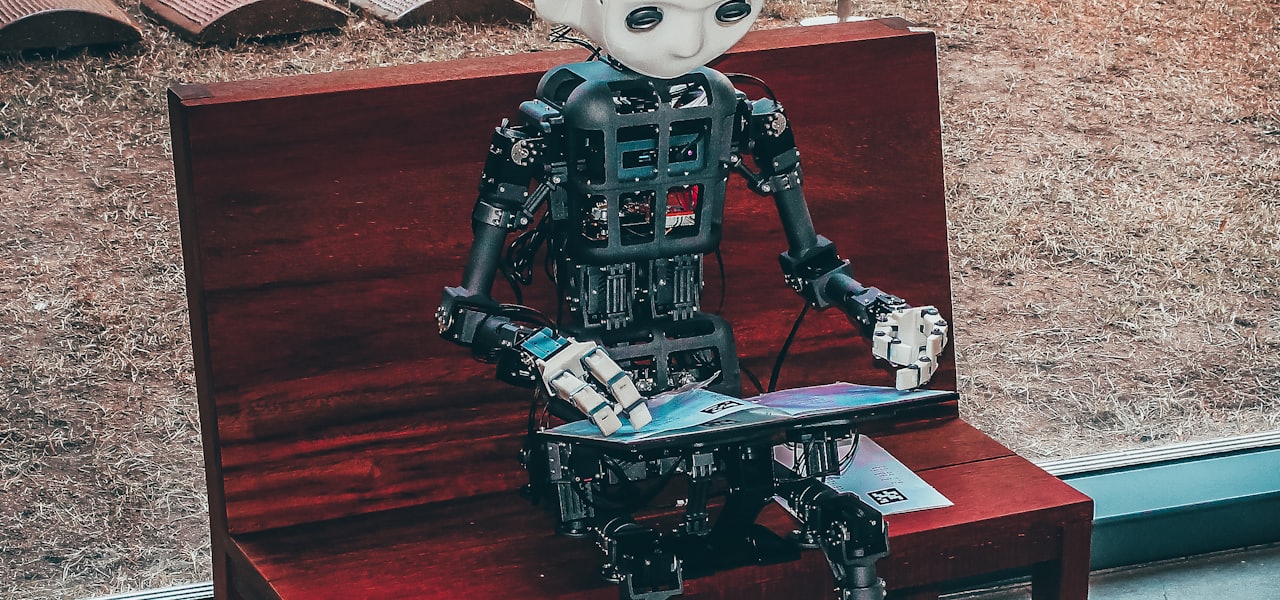
Information Processing Language (IPL) is a programming language created by Allen Newell, Cliff Shaw, and Herbert A. Simon at RAND Corporation and the Carnegie Institute of Technology about 1956. Newell had the job of language specifier-application programmer, Shaw was the system programmer, and Simon had the job of application programmer-user. IPL included features to facilitate AI programming, specifically problem solving. such as lists, dynamic memory allocation, data types, recursion, functions as arguments, generators, and cooperative multitasking. IPL also introduced the concepts of symbol processing and list processing. Unfortunately, all of these innovations were cast in a difficult assembly-language style. Nonetheless, IPL-V (the only public version of IPL) ran on many computers through the mid 1960s. == Basics of IPL == An IPL computer has: A set of symbols. All symbols are addresses, and name cells. Unlike symbols in later languages, symbols consist of a character followed by a number, and are written H1, A29, 9–7, 9–100. Cell names beginning with a letter are regional, and are absolute addresses. Cell names beginning with "9-" are local, and are meaningful within the context of a single list. One list's 9-1 is independent of another list's 9–1. Other symbols (e.g., pure numbers) are internal. A set of cells. Lists are made from several cells including mutual references. Cells have several fields: P, a 3-bit field used for an operation code when the cell is used as an instruction, and unused when the cell is data. Q, a 3-valued field used for indirect reference when the cell is used as an instruction, and unused when the cell is data. SYMB, a symbol used as the value in the cell. A set of primitive processes, which would be termed primitive functions in modern languages. The data structure of IPL is the list, but lists are more intricate structures than in many languages. A list consists of a singly linked sequence of symbols, as might be expected—plus some description lists, which are subsidiary singly linked lists interpreted as alternating attribute names and values. IPL provides primitives to access and mutate attribute value by name. The description lists are given local names (of the form 9–1). So, a list named L1 containing the symbols S4 and S5, and described by associating value V1 to attribute A1 and V2 to A2, would be stored as follows. 0 indicates the end of a list; the cell names 100, 101, etc. are automatically generated internal symbols whose values are irrelevant. These cells can be scattered throughout memory; only L1, which uses a regional name that must be globally known, needs to reside in a specific place. IPL is an assembly language for manipulating lists. It has a few cells which are used as special-purpose registers. H1, for example, is the program counter. The SYMB field of H1 is the name of the current instruction. However, H1 is interpreted as a list; the LINK of H1 is, in modern terms, a pointer to the beginning of the call stack. For example, subroutine calls push the SYMB of H1 onto this stack. H2 is the free-list. Procedures which need to allocate memory grab cells off of H2; procedures which are finished with memory put it on H2. On entry to a function, the list of parameters is given in H0; on exit, the results should be returned in H0. Many procedures return a Boolean result indicating success or failure, which is put in H5. Ten cells, W0-W9, are reserved for public working storage. Procedures are "morally bound" (to quote the CACM article) to save and restore the values of these cells. There are eight instructions, based on the values of P: subroutine call, push/pop S to H0; push/pop the symbol in S to the list attached to S; copy value to S; conditional branch. In these instructions, S is the target. S is either the value of the SYMB field if Q=0, the symbol in the cell named by SYMB if Q=1, or the symbol in the cell named by the symbol in the cell named by SYMB if Q=2. In all cases but conditional branch, the LINK field of the cell tells which instruction to execute next. IPL has a library of some 150 basic operations. These include such operations as: Test symbols for equality Find, set, or erase an attribute of a list Locate the next symbol in a list; insert a symbol in a list; erase or copy an entire list Arithmetic operations (on symbol names) Manipulation of symbols; e.g., test if a symbol denotes an integer, or make a symbol local I/O operations "Generators", which correspond to iterators and filters in functional programming. For example, a generator may accept a list of numbers and produce the list of their squares. Generators could accept suitably designed functions—strictly, the addresses of code of suitably designed functions—as arguments. == History == IPL was first utilized to demonstrate that the theorems in Principia Mathematica which were proven laboriously by hand, by Bertrand Russell and Alfred North Whitehead, could in fact be proven by computation. According to Simon's autobiography Models of My Life, this application was originally developed first by hand simulation, using his children as the computing elements, while writing on and holding up note cards as the registers which contained the state variables of the program. IPL was used to implement several early artificial intelligence programs, also by the same authors: the Logic Theorist (1956), the General Problem Solver (1957), and their computer chess program NSS (1958). Several versions of IPL were created: IPL-I (never implemented), IPL-II (1957 for JOHNNIAC), IPL-III (existed briefly), IPL-IV, IPL-V (1958, for IBM 650, IBM 704, IBM 7090, Philco model 212, many others. Widely used). IPL-VI was a proposal for an IPL hardware. A co-processor “IPL-VC” for the CDC 3600 at Argonne National Libraries was developed which could run IPL-V commands. It was used to implement another checker-playing program. This hardware implementation did not improve running times sufficiently to “compete favorably with a language more directly oriented to the structure of present-day machines”. IPL was soon displaced by Lisp, which had much more powerful features, a simpler syntax, and the benefit of automatic garbage collection. == Legacy to computer programming == IPL arguably introduced several programming language features: List manipulation—but only lists of atoms, not general lists Property lists—but only when attached to other lists Higher-order functions—while assembly programming had always allowed computing with the addresses of functions, IPL was an early attempt to generalize this property of assembly language in a principled way Computation with symbols—though symbols have a restricted form in IPL (letter followed by number) Virtual machine Many of these features were generalized, rationalized, and incorporated into Lisp and from there into many other programming languages during the next several decades.
Channel (digital image)
Color digital images are made of pixels, and pixels are made of combinations of primary colors represented by a series of code. A channel in this context is the grayscale image of the same size as a color image, made of just one of these primary colors. For instance, an image from a standard digital camera will have a red, green and blue channel. A grayscale image has just one channel. In geographic information systems, channels are often referred to as raster bands. Another closely related concept is feature maps, which are used in convolutional neural networks. == Overview == In the digital realm, there can be any number of conventional primary colors making up an image; a channel in this case is extended to be the grayscale image based on any such conventional primary color. By extension, a channel is any grayscale image of the same dimension as and associated with the original image. Channel is a conventional term used to refer to a certain component of an image. In reality, any image format can use any algorithm internally to store images. For instance, GIF images actually refer to the color in each pixel by an index number, which refers to a table where three color components are stored. However, regardless of how a specific format stores the images, discrete color channels can always be determined, as long as a final color image can be rendered. The concept of channels is extended beyond the visible spectrum in multispectral and hyperspectral imaging. In that context, each channel corresponds to a range of wavelengths and contains spectroscopic information. The channels can have multiple widths and ranges. Three main channel types (or color models) exist, and have respective strengths and weaknesses. === RGB images === An RGB image has three channels: red, green, and blue. RGB channels roughly follow the color receptors in the human eye, and are used in computer displays and image scanners. If the RGB image is 24-bit (the industry standard as of 2005), each channel has 8 bits, for red, green, and blue—in other words, the image is composed of three images (one for each channel), where each image can store discrete pixels with conventional brightness intensities between 0 and 255. If the RGB image is 48-bit (very high color-depth), each channel has 16-bit per pixel color, that is 16-bit red, green, and blue for each per pixel. ==== RGB color sample ==== Notice how the grey trees have similar brightness in all channels, the red dress is much brighter in the red channel than in the other two, and how the green part of the picture is shown much brighter in the green channel. === YUV === YUV images are an affine transformation of the RGB colorspace, originated in broadcasting. The Y channel correlates approximately with perceived intensity, whilst the U and V channels provide colour information. === CMYK === A CMYK image has four channels: cyan, magenta, yellow, and key (black). CMYK is the standard for print, where subtractive coloring is used. A 32-bit CMYK image (the industry standard as of 2005) is made of four 8-bit channels, one for cyan, one for magenta, one for yellow, and one for key color (typically is black). 64-bit storage for CMYK images (16-bit per channel) is not common, since CMYK is usually device-dependent, whereas RGB is the generic standard for device-independent storage. ==== CMYK color sample ==== === HSV === HSV, or hue saturation value, stores color information in three channels, just like RGB, but one channel is devoted to brightness (value), and the other two convey colour information. The value channel is similar to (but not exactly the same as) the CMYK black channel, or its negative. HSV is especially useful in lossy video compression, where loss of color information is less noticeable to the human eye. == Alpha channel == The alpha channel stores transparency information—the higher the value, the more opaque that pixel is. No camera or scanner measures transparency, although physical objects certainly can possess transparency, but the alpha channel is extremely useful for compositing digital images together. Bluescreen technology involves filming actors in front of a primary color background, then setting that color to transparent, and compositing it with a background. The GIF and PNG image formats use alpha channels on the World Wide Web to merge images on web pages so that they appear to have an arbitrary shape even on a non-uniform background. == Other channels == In 3D computer graphics, multiple channels are used for additional control over material rendering; e.g., controlling specularity and so on. == Bit depth == In digitizing images, the color channels are converted to numbers. Since images contain thousands of pixels, each with multiple channels, channels are usually encoded in as few bits as possible. Typical values are 8 bits per channel or 16 bits per channel. Indexed color effectively gets rid of channels altogether to get, for instance, 3 channels into 8 bits (GIF) or 16 bits. == Optimized channel sizes == Since the brain does not necessarily perceive distinctions in each channel to the same degree as in other channels, it is possible that differing the number of bits allocated to each channel will result in more optimal storage; in particular, for RGB images, compressing the blue channel the most and the red channel the least may be better than giving equal space to each. Among other techniques, lossy video compression uses chroma subsampling to reduce the bit depth in color channels (hue and saturation), while keeping all brightness information (value in HSV). 16-bit HiColor stores red and blue in 5 bits, and green in 6 bits.
Least-squares spectral analysis
Least-squares spectral analysis (LSSA) is a class of methods for estimating a frequency spectrum by fitting sinusoids to data using a least-squares fit. Unlike Fourier analysis, the most widely used spectral method in science, data need not be equally spaced to use LSSA. Furthermore, while Fourier analysis generally amplifies long-period noise in long or gapped records, LSSA mitigates such problems. The first strictly least-squares LSSA method was developed in 1969 and 1971, and is known as the Vaníček method or the Gauss–Vaniček method, after its inventor Petr Vaníček and Carl Friedrich Gauss, the inventor of the least-squares method for error minimization. A widely known LSSA variant is the Lomb method or the Lomb–Scargle periodogram, based on dated computational simplifications of the Vaníček method introduced in the 1970s and 1980s, first by Nicholas R. Lomb and later by Jeffrey D. Scargle. Other LSSA variants have been subsequently developed. == Historical background == The close connections between Fourier analysis, the periodogram, and the least-squares fitting of sinusoids have been known for a long time. However, most developments are restricted to complete data sets of equally spaced samples. In 1963, Freek J. M. Barning of Mathematisch Centrum, Amsterdam, handled unequally spaced data by similar techniques, including both a periodogram analysis equivalent to what nowadays is called the Lomb method and least-squares fitting of selected frequencies of sinusoids determined from such periodograms — and connected by a procedure known today as the matching pursuit with post-back fitting or the orthogonal matching pursuit. Petr Vaníček, a Canadian geophysicist and geodesist of the University of New Brunswick, proposed in 1969 also the matching-pursuit approach for equally and unequally spaced data, which he called "successive spectral analysis" and the result a "least-squares periodogram". He generalized this method to account for any systematic components beyond a simple mean, such as a "predicted linear (quadratic, exponential, ...) secular trend of unknown magnitude", and applied it to a variety of samples, in 1971. Vaníček's strictly least-squares method was then simplified in 1976 by Nicholas R. Lomb of the University of Sydney, who pointed out its close connection to periodogram analysis. Subsequently, the definition of a periodogram of unequally spaced data was modified and analyzed by Jeffrey D. Scargle of NASA Ames Research Center, who showed that, with minor changes, it becomes identical to Lomb's least-squares formula for fitting individual sinusoid frequencies. Scargle states that his paper "does not introduce a new detection technique, but instead studies the reliability and efficiency of detection with the most commonly used technique, the periodogram, in the case where the observation times are unevenly spaced," and further points out regarding least-squares fitting of sinusoids compared to periodogram analysis, that his paper "establishes, apparently for the first time, that (with the proposed modifications) these two methods are exactly equivalent." Press summarizes the development this way: A completely different method of spectral analysis for unevenly sampled data, one that mitigates these difficulties and has some other very desirable properties, was developed by Lomb, based in part on earlier work by Barning and Vanicek, and additionally elaborated by Scargle. In 1989, Michael J. Korenberg of Queen's University in Kingston, Ontario, developed the "fast orthogonal search" method of more quickly finding a near-optimal decomposition of spectra or other problems, similar to the technique that later became known as the orthogonal matching pursuit. == Development of LSSA and variants == === The Vaníček method === In the Vaníček method, a discrete data set is approximated by a weighted sum of sinusoids of progressively determined frequencies using a standard linear regression or least-squares fit. The frequencies are chosen using a method similar to Barning's, but going further in optimizing the choice of each successive new frequency by picking the frequency that minimizes the residual after least-squares fitting (equivalent to the fitting technique now known as matching pursuit with pre-backfitting). The number of sinusoids must be less than or equal to the number of data samples (counting sines and cosines of the same frequency as separate sinusoids). The relationship between the DFT and the approximation of trigonometric functions using the least-squares method is well explained in (Strutz, 2017). A data vector Φ is represented as a weighted sum of sinusoidal basis functions, tabulated in a matrix A by evaluating each function at the sample times, with weight vector x: ϕ ≈ A x , {\displaystyle \phi \approx {\textbf {A}}x,} where the weights vector x is chosen to minimize the sum of squared errors in approximating Φ. The solution for x is closed-form, using standard linear regression: x = ( A T A ) − 1 A T ϕ . {\displaystyle x=({\textbf {A}}^{\mathrm {T} }{\textbf {A}})^{-1}{\textbf {A}}^{\mathrm {T} }\phi .} Here the matrix A can be based on any set of functions mutually independent (not necessarily orthogonal) when evaluated at the sample times; functions used for spectral analysis are typically sines and cosines evenly distributed over the frequency range of interest. If we choose too many frequencies in a too-narrow frequency range, the functions will be insufficiently independent, the matrix ill-conditioned, and the resulting spectrum meaningless. When the basis functions in A are orthogonal (that is, not correlated, meaning the columns have zero pair-wise dot products), the matrix ATA is diagonal; when the columns all have the same power (sum of squares of elements), then that matrix is an identity matrix times a constant, so the inversion is trivial. The latter is the case when the sample times are equally spaced and sinusoids chosen as sines and cosines equally spaced in pairs on the frequency interval 0 to a half cycle per sample (spaced by 1/N cycles per sample, omitting the sine phases at 0 and maximum frequency where they are identically zero). This case is known as the discrete Fourier transform, slightly rewritten in terms of measurements and coefficients. x = A T ϕ {\displaystyle x={\textbf {A}}^{\mathrm {T} }\phi } — DFT case for N equally spaced samples and frequencies, within a scalar factor. === The Lomb method === Trying to lower the computational burden of the Vaníček method in 1976 (no longer an issue), Lomb proposed using the above simplification in general, except for pair-wise correlations between sine and cosine bases of the same frequency, since the correlations between pairs of sinusoids are often small, at least when they are not tightly spaced. This formulation is essentially that of the traditional periodogram but adapted for use with unevenly spaced samples. The vector x is a reasonably good estimate of an underlying spectrum, but since we ignore any correlations, Ax is no longer a good approximation to the signal, and the method is no longer a least-squares method — yet in the literature continues to be referred to as such. Rather than just taking dot products of the data with sine and cosine waveforms directly, Scargle modified the standard periodogram formula so to find a time delay τ {\displaystyle \tau } first, such that this pair of sinusoids would be mutually orthogonal at sample times t j {\displaystyle t_{j}} and also adjusted for the potentially unequal powers of these two basis functions, to obtain a better estimate of the power at a frequency. This procedure made his modified periodogram method exactly equivalent to Lomb's method. Time delay τ {\displaystyle \tau } by definition equals to tan 2 ω τ = ∑ j sin 2 ω t j ∑ j cos 2 ω t j . {\displaystyle \tan {2\omega \tau }={\frac {\sum _{j}\sin 2\omega t_{j}}{\sum _{j}\cos 2\omega t_{j}}}.} Then the periodogram at frequency ω {\displaystyle \omega } is estimated as: P x ( ω ) = 1 2 [ [ ∑ j X j cos ω ( t j − τ ) ] 2 ∑ j cos 2 ω ( t j − τ ) + [ ∑ j X j sin ω ( t j − τ ) ] 2 ∑ j sin 2 ω ( t j − τ ) ] , {\displaystyle P_{x}(\omega )={\frac {1}{2}}\left[{\frac {\left[\sum _{j}X_{j}\cos \omega (t_{j}-\tau )\right]^{2}}{\sum _{j}\cos ^{2}\omega (t_{j}-\tau )}}+{\frac {\left[\sum _{j}X_{j}\sin \omega (t_{j}-\tau )\right]^{2}}{\sum _{j}\sin ^{2}\omega (t_{j}-\tau )}}\right],} which, as Scargle reports, has the same statistical distribution as the periodogram in the evenly sampled case. At any individual frequency ω {\displaystyle \omega } , this method gives the same power as does a least-squares fit to sinusoids of that frequency and of the form: ϕ ( t ) = A sin ω t + B cos ω t . {\displaystyle \phi (t)=A\sin \omega t+B\cos \omega t.} In practice, it is always difficult to judge if a given Lomb peak is significant or not, especially when the nature of the noise is unknown, so for example a false-alarm spectr
Subject (documents)
In library and information science documents (such as books, articles and pictures) are classified and searched by subject – as well as by other attributes such as author, genre and document type. This makes "subject" a fundamental term in this field. Library and information specialists assign subject labels to documents to make them findable. There are many ways to do this and in general there is not always consensus about which subject should be assigned to a given document. To optimize subject indexing and searching, we need to have a deeper understanding of what a subject is. The question: "what is to be understood by the statement 'document A belongs to subject category X'?" has been debated in the field for more than 100 years (see below) == Theoretical view == === Charles Ammi Cutter (1837–1903) === For Cutter the stability of subjects depends on a social process in which their meaning is stabilized in a name or a designation. A subject "referred [...] to those intellections [...] that had received a name that itself represented a distinct consensus in usage" (Miksa, 1983a, p. 60) and: the "systematic structure of established subjects" is "resident in the public realm" (Miksa, 1983a, p. 69); "[s]ubjects are by their very nature locations in a classificatory structure of publicly accumulated knowledge (Miksa, 1983a, p. 61). Bernd Frohmann adds: "The stability of the public realm in turn relies upon natural and objective mental structures which, with proper education, govern a natural progression from particular to general concepts. Since for Cutter, mind, society, and SKO [Systems of Knowledge Organization] stand one behind the other, each supporting each, all manifesting the same structure, his discursive construction of subjects invites connections with discourses of mind, education, and society. The Dewey Decimal Classification (DDC), by contrast, severs those connections. Melvil Dewey emphasized more than once that his system maps no structure beyond its own; there is neither a "transcendental deduction" of its categories nor any reference to Cutter's objective structure of social consensus. It is content-free: Dewey disdained any philosophical excogitation of the meaning of his class symbols, leaving the job of finding verbal equivalents to others. His innovation and the essence of the system lay in the notation. The DDC is a poorly semiotic system of expanding nests of ten digits, lacking any referent beyond itself. In it, a subject is wholly constituted in terms of its position in the system. The essential characteristic of a subject is a class symbol which refers only to other symbols. Its verbal equivalent is accidental, a merely pragmatic characteristic... .... The conflict of interpretations over "subjects" became explicit in the battles between "bibliography" (an approach to subjects having much in common with Cutter's) and Dewey's "close classification". William Fletcher spoke for the scholarly bibliographer.... Fletcher's "subjects", like Cutter's, referred to the categories of a fantasized, stable social order, whereas Dewey's subjects were elements of a semiological system of standardized, techno-bureaucratic administrative software for the library in its corporate, rather than high culture, incarnation". (Frohmann, 1994, 112–113). Cutter's early view on what a subject is, is probably wiser than most understandings that dominated the 20th century – and also the understanding reflected in the ISO-standard quoted below. The early statements quoted by Frohmann indicate that subjects are somehow shaped in social processes. When that is said, it should be added that they are not particularly detailed or clear. We only get a vague idea of the social nature of subjects. === S. R. Ranganathan (1892–1972) === A classification system with an explicit theoretical foundation is Ranganathan's Colon Classification. Ranganathan provided an explicit definition of the concept of "subject": Subject – an organized body of ideas, whose extension and intension are likely to fall coherently within the field of interests and comfortably within the intellectual competence and the field of inevitable specialization of a normal person. A related definition is given by one of Ranganathan's students: A subject is an organized and systematized body of ideas. It may consist of one idea or a combination of several... Ranganathan's definition of "subject" is strongly influenced by his Colon Classification system. The colon system is based on the combination of single elements from facets to subject designation. This is the reason why the combined nature of subjects are emphasized so strongly. It leads, however, to absurdities such as the claim that gold cannot be a subject (but is alternatively termed "an isolate"). This aspect of the theory has been criticized by Metcalfe (1973, p. 318). Metcalfe's skepticism regarding Ranganathan's theory is formulated in hard words (op. cit., p. 317): "This pseudo-science imposed itself on British disciples from about 1950 on...". It seems unacceptable that Ranganathan defines the word subject in a way that favors his own system. A scientific concept like "subject" should make it possible to compare different ways of establishing access to information. Whether or not subjects are combined or not should be examined once their definition has been given, it should not determined a priori, in the definition. Besides the emphasis on the combined, organizing and systematizing nature of subjects contains Ranganathan's definition of subject the pragmatic demand, that a subject should be determined in a way that suits a normal person's competency or specialization. Again we see a strange kind of wishful thinking mixing a general understanding of a concept with demands put by his own specific system. One thing is what the word subject means, quite another issue is how to provide subject descriptions that fulfill demands such as the specificity of a given information retrieval language which fulfill demands put on the system, such as precision and recall. If researchers too often define terms in ways that favor specific kinds of systems, that are such definitions not useful to provide more general theories about subjects, subject analysis and IR. Among other things are comparative studies of different kinds of systems made difficult. Based on these arguments, as well as additional arguments which have been used in the literature, we may conclude that Ranganathan's definition of the concept "subject" is not suited for scientific use. Like the definition of "subject" given by the ISO-standard for topic maps, may Ranganathan's definition be useful within his own closed system. The purpose of a scientific and scholarly field is, however, to examine the relative fruitfulness of systems such as topic maps and Colon Classification. For such purpose is another understanding of "subject" necessary. === Patrick Wilson (1927–2003) === In his book Wilson (1968) examined – in particular by thought experiments – the suitability of different methods of examining the subject of a document. The methods were: identifying the author's purpose for writing the document, weighing the relative dominance and subordination of different elements in the picture, which the reading imposes on the reader, grouping or count the document's use of concepts and references, construing a set of rules for selecting elements deemed necessary (as opposed to unnecessary) for the work as a whole. Patrick Wilson shows convincingly that each of these methods are insufficient to determine the subject of a document and is led to conclude ( p. 89): "The notion of the subject of a writing is indeterminate..." or, on p. 92 (about what users may expect to find using a particular position in a library classification system): "For nothing definite can be expected of the things found at any given position". In connection to the last quote has Wilson an interesting footnote in which he writes that authors of documents often use terms in ambiguous ways ("hostility" is used as an example). Even if the librarian could personally develop a very precise understanding of a concept, he would be unable to use it in his classification, because none of the documents use the term in the same precise way. Based on this argumentation is Wilson led to conclude: "If people write on what are for them ill-defined phenomena, a correct description of their subjects must reflect the ill-definedness". Wilson's concept of subject was discussed by Hjørland (1992) who found that it is problematic to give up the precise understanding of such a basic term in LIS. Wilson's arguments led him to an agnostic position which Hjørland found unacceptable and unnecessary. Concerning the authors' use of ambiguous terms, the role of the subject analysis is to determine which documents would be fruitful for users to identify whether or not the documents use one or another term or whether a given term i
BioCreative
BioCreAtIvE (A critical assessment of text mining methods in molecular biology) consists in a community-wide effort for evaluating information extraction and text mining developments in the biological domain. It was preceded by the Knowledge Discovery and Data Mining (KDD) Challenge Cup for detection of gene mentions. == Community Challenges == === First edition (2004-2005) === Three main tasks were posed at the first BioCreAtIvE challenge: the entity extraction task, the gene name normalization task, and the functional annotation of gene products task. The data sets produced by this contest serve as a Gold Standard training and test set to evaluate and train Bio-NER tools and annotation extraction tools. === Second edition (2006-2007) === The second BioCreAtIvE challenge (2006-2007) had also 3 tasks: detection of gene mentions, extraction of unique idenfiers for genes and extraction information related to physical protein-protein interactions. It counted with participation of 44 teams from 13 countries. === Third edition (2011-2012) === The third edition of BioCreative included for the first time the InterActive Task (IAT), designed to evaluate the practical usability of text mining tools in real-world biocuration tasks. === Fifth edition (2016) === BioCreative V had 5 different tracks, including an interactive task (IAT) for usability of text mining systems and a track using the BioC format for curating information for BioGRID.
Keith Youngin George II
Keith "Youngin" George II is a former mixtape DJ, music executive, manager, producer, and technology app director. He has collaborated with Maino, T-Pain, Nas and Soulja Boy, among others. He was instrumental in the launch of social media app and website, Kandiid in 2021 and served as Fliiks App Director of Regional Development. == Career == Keith Anthony George II was born in Upper Heyford, Oxfordshire, England. His father was in the Air Force which exposed him to different cultures and music. He graduated from Allen High School and attended San Antonio College. George's music career began in 2006 as a mixtape DJ working as DJ Youngin Beatz. He performed at various shows and worked with a variety of artists, managers, and music executives. In 2007, George released the mixtape, Untapped market Vol. 1 (Da Underdogz), which featured tracks from artists including Kanye West, Lil Wayne, 50 Cent, Yung Berg, and Nelly. In 2008, he began working with Def Jam executive Sarah Alminawi who was managing Maino at the time. George played a key role in the marketing and promotional success of Maino's single, Hi Hater, which peaked at #8 on Billboard's US Bubbling Under Hot 100 chart. In 2021, George was an advisor and infrastructure head at Kandiid, a social media app which won a W3 Award in 2022. In 2023, he became involved with Fliiks App as Director of Regional Development which earned a Telly Award, two Muse Awards, and a W3 Award in 2025. In 2025, George was a composer and producer on two singles on Sekou Andrews's album, Koumami; The Chosen One: ACT 1 (featuring Lion Babe) and Love Don't Care (featuring Jordin Sparks and Omari Hardwick). In 2025, he was awarded an Atlanta City Proclamation for Philanthropy and Community Leadership for his partnership with Women's International Grail, a nonprofit organization that assists women, single mothers, and low-income families. He also collaborates with local youth programs, creative networks, and minority-owned startups, providing access to mentorship and industry knowledge. == Awards ==
Enterprise information integration
Enterprise information integration (EII) is the ability to support a unified view of data and information for an entire organization. The goal of EII is to get a large set of heterogeneous data sources to appear to a user or system as a single, homogeneous data source. In a data virtualization application of EII, there is a process of information integration, using data abstraction to provide a unified interface (known as uniform data access) for viewing all the data within an organization, and a single set of structures and naming conventions (known as uniform information representation) to represent this data. == Overview == Data within an enterprise can be stored in heterogeneous formats, including relational databases (which themselves come in a large number of varieties), text files, XML files, spreadsheets and a variety of proprietary storage methods, each with their own indexing and data access methods. Standardized data access APIs have emerged that offer a specific set of commands to retrieve and modify data from a generic data source. Many applications exist that implement these APIs' commands across various data sources, most notably relational databases. Such APIs include ODBC, JDBC, XQJ, OLE DB, and more recently ADO.NET. There are also standard formats for representing data within a file that are very important to information integration. The best-known of these is XML, which has emerged as a standard universal representation format. There are also more specific XML "grammars" defined for specific types of data such as Geography Markup Language for expressing geographical features and Directory Service Markup Language for holding directory-style information. In addition, non-XML standard formats exist such as iCalendar for representing calendar information and vCard for business card information. Enterprise Information Integration (EII) applies data integration commercially. Despite the theoretical problems described above, the private sector shows more concern with the problems of data integration as a viable product. EII emphasizes neither correctness nor tractability, but speed and simplicity. === Uniform data access === Uniform data access means connectivity and controllability across numerous target data sources. Necessary to fields such as EII and Electronic Data Interchange (EDI), it is most often used regarding analysis of disparate data types and data sources, which must be rendered into a uniform information representation, and generally must appear homogenous to the analysis tools—when the data being analyzed is typically heterogeneous and widely varying in size, type, and original representation. === Uniform information representation === Uniform information representation allows information from several realms or disciplines to be displayed and worked with as if it came from the same realm or discipline. It takes information from a number of sources, which may have used different methodologies and metrics in their data collection, and builds a single large collection of information, where some records may be more complete than others across all fields of data Uniform information representation is particularly important in EII and Electronic Data Interchange (EDI), where different departments of a large organization may have collected information for different purposes, with different labels and units, until one department realized that data already collected by those other departments could be re-purposed for their own needs—saving the enterprise the effort and cost of re-collecting the same information. === Combining disparate data sets === Each data source is disparate and as such is not designed to support EII. Therefore, data virtualization as well as data federation depends upon accidental data commonality to support combining data and information from disparate data sets. Because of this lack of data value commonality across data sources, the return set may be inaccurate, incomplete, and impossible to validate. One solution is to recast disparate databases to integrate these databases without the need for ETL. The recast databases support commonality constraints where referential integrity may be enforced between databases. The recast databases provide designed data access paths with data value commonality across databases. === Simplicity of deployment === Even if recognized as a solution to a problem, EII as of 2009 currently takes time to apply and offers complexities in deployment. Proposed schema-less solutions include "Lean Middleware". === Handling higher-order information === Analysts experience difficulty—even with a functioning information integration system—in determining whether the sources in the database will satisfy a given application. Answering these kinds of questions about a set of repositories requires semantic information like metadata and/or ontologies. == Applications == EII products enable loose coupling between homogeneous-data consuming client applications and services and heterogeneous-data stores. Such client applications and services include Desktop Productivity Tools (spreadsheets, word processors, presentation software, etc.), development environments and frameworks (Java EE, .NET, Mono, SOAP or RESTful Web services, etc.), business intelligence (BI), business activity monitoring (BAM) software, enterprise resource planning (ERP), Customer relationship management (CRM), business process management (BPM and/or BPEL) Software, and web content management (CMS). == Data access technologies == Service Data Objects (SDO) for Java, C++ and .Net clients and any type of data source XQuery and XQuery API for Java